If you have written an ebook and want to turn it into a reliable income stream, the next decision is critical: where you sell it matters as much as what is inside it. Knowing where can I sell ebooks online comes down to understanding how much control you want over your pricing, your audience, and your revenue.
This guide covers the best platforms to sell ebooks in 2026, how they compare, and which one fits your goals as a creator or business.
Whether you are a first-time author testing your idea, an educator looking to sell ebooks alongside a course, or a seasoned writer expanding into digital products, the platforms available today offer a range of options at every level of technical skill and marketing experience.
Some require nothing more than a PDF file and a few minutes to set up. Others take longer to configure but pay off significantly over time through higher margins, better customer data, and tighter integration with your existing content ecosystem.
LearnPress – WordPress LMS Plugin
We provide an amazing WordPress LMS plugin to create & sell online courses. Let’s find out!
Try NowTable of Contents
Why Choosing The Right Platform Matters
The platform you choose to sell ebooks determines three things that directly affect your income: your royalty percentage, your control over customer data, and how visible your ebook is to new buyers. A platform with high traffic can bring in sales without much marketing effort, but it often takes a significant cut of each sale and rarely gives you access to your buyers’ email addresses. A platform you control offers full margins and full data access, but you are responsible for driving every visitor yourself.
Neither approach is wrong. The best place to sell ebooks depends on your existing audience, your budget, and how much time you can invest in marketing. Creators who are just starting out often benefit from marketplace visibility, while established educators, coaches, and authors tend to earn more by selling directly.
Understanding the difference early prevents you from rebuilding your entire setup six months in.
Where to Sell ebooks Online?
There are two broad categories of places where to sell ebooks online: third-party marketplaces and direct-sale platforms. Within those two categories, you will also encounter hybrid tools that let you do both. Here is how each category works.
Third-party marketplaces
Marketplaces like Amazon Kindle Direct Publishing (KDP) and Smashwords host your ebook alongside thousands of other titles. You upload your file, set a price, and the platform handles payment processing, delivery, and customer support. In exchange, the marketplace takes a percentage of each sale, typically between 30 and 65 percent depending on your pricing tier and the platform’s rules.
The advantage is reach. Amazon alone has hundreds of millions of active customers. If your ebook fits a popular genre or subject and is priced competitively, the marketplace’s built-in search engine can send buyers your way without any paid advertising.
The disadvantage is that you own very little of the relationship. You often receive a list of sales figures but no buyer names, email addresses, or behavioral data. If the platform changes its algorithm or its royalty structure, your income changes with it.
Direct-sale platforms
Direct-sale tools such as Gumroad, Payhip, Lemon Squeezy, and Shopify allow you to sell ebooks online through your own storefront or an embedded checkout. You set your price, keep a larger share of each sale, and collect customer email addresses automatically with every purchase.
The tradeoff is traffic. A direct-sale platform does not bring buyers to you. You need to send them there from your social media channels, email list, website, or paid ads. Creators who already have an audience, even a small but engaged one, often find direct-sale tools significantly more profitable than marketplaces.
Your own WordPress website
Selling directly from a WordPress site gives you maximum control. You own the storefront, the customer data, the pricing logic, and the delivery system. With the right WordPress plugin or LMS, you can bundle an ebook with a course, a video series, or a membership for a higher-value offer.
This is the setup that scales best for educators and course creators who want to sell ebooks alongside structured learning content.
4+ Best Platforms to Sell ebooks Directly to Your Audience
Direct-sale platforms are the most popular answer to where can I sell my ebook when you already have some audience or are willing to build one. Here are the strongest options.
Gumroad
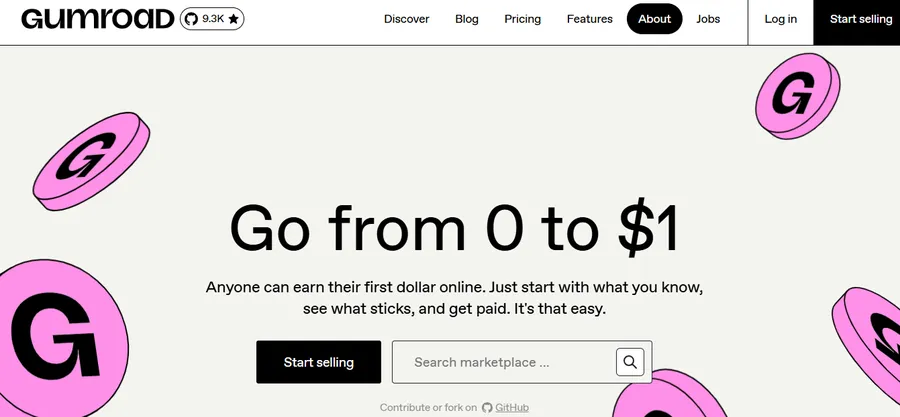
Gumroad is one of the simplest tools available for creators who want to start selling a digital product quickly. You sign up, upload your ebook as a PDF or EPUB, set a price, and share the product link. Gumroad handles payment processing via Stripe and PayPal and delivers the file automatically after purchase.
Gumroad charges a flat 10 percent fee on sales on its free plan. There is no monthly subscription, which makes it accessible if you are testing demand before investing in a more robust setup. The platform also supports pay-what-you-want pricing, which can increase conversion rates for new audiences who are unfamiliar with your work.
One limitation worth noting: Gumroad’s storefront design options are limited. If visual branding is important to your positioning, you will likely want to embed the checkout on your own site rather than send buyers to your Gumroad profile page.
Checkout Page
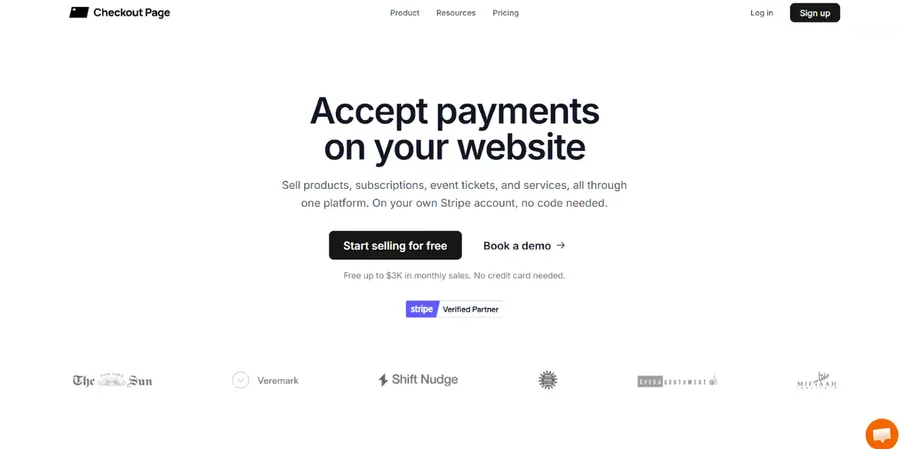
Checkout Page is built for anyone who wants a branded checkout without building an entire storefront. You connect your Stripe account, create a page for a product or subscription, and get a shareable link or embed code for your own site or sales funnel. It covers one-time sales, subscriptions, payment plans, pay-what-you-want pricing, and event tickets, and lets you add order bumps or one-click upsells right at checkout.
Checkout Page now offers a free plan for users to get started. Paid plans start at $29 a month, priced by your monthly sales volume rather than a percentage cut, on top of whatever Stripe charges to process the card. That flat-fee structure tends to work in your favor once sales pick up, since your cost stays fixed instead of climbing with revenue. A 7-day free trial lets you test it before you commit.
One limitation worth noting: you need to set up your own Stripe account before you can use it, so it isn’t a same-day option if you don’t already have a payment processor in place.
Payhip
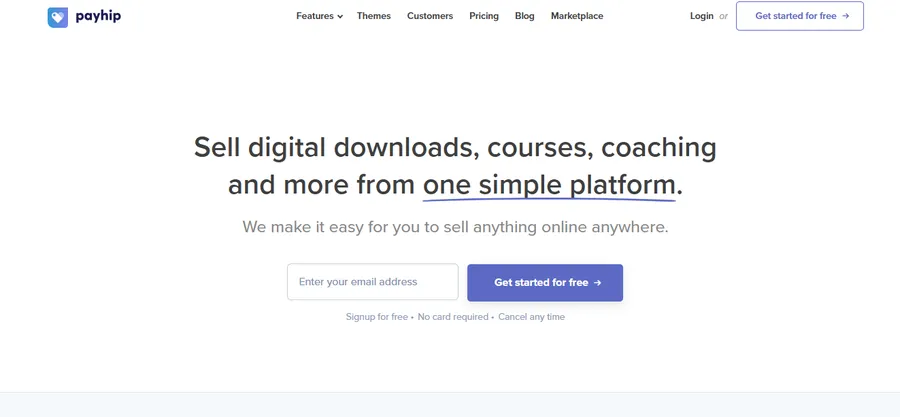
Payhip is a strong alternative to Gumroad, particularly for creators who want a cleaner storefront and EU VAT handling built in. Payhip automatically calculates and remits VAT on digital sales to European customers, which removes a significant compliance burden if you sell internationally.
The free plan on Payhip charges a 5 percent transaction fee. Two paid plans reduce that fee to 2 percent or eliminate it entirely at $149 per month. For high-volume ebook sellers, the math often favors upgrading to remove the transaction fee once monthly revenue passes a certain point.
Payhip also supports upsells at checkout and integrates with Mailchimp, ConvertKit, and ActiveCampaign, so you can automatically add buyers to an email sequence after purchase.
Lemon Squeezy
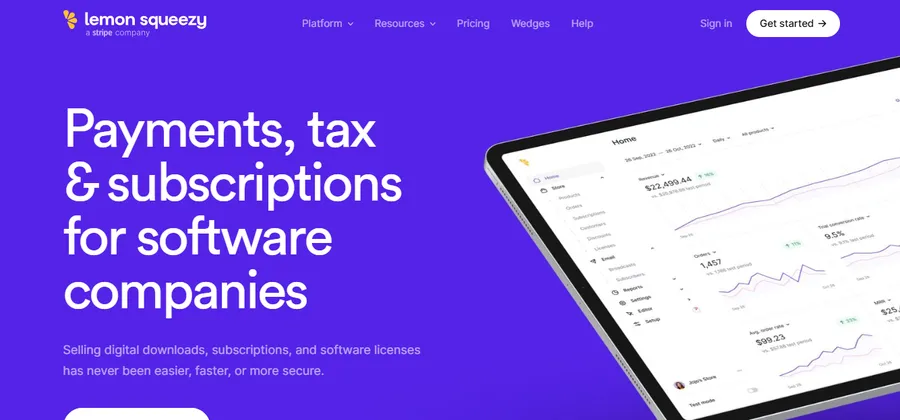
Lemon Squeezy positions itself as a merchant of record, which means it handles all sales tax compliance globally on your behalf. This is a meaningful advantage for creators who sell in multiple countries and do not want to manage tax registrations in each jurisdiction.
Lemon Squeezy charges 5 percent plus $0.50 per transaction on its standard plan. The platform supports subscription products as well as one-time purchases, so if you plan to expand beyond ebook sales into a membership or software product, Lemon Squeezy can accommodate that without switching platforms.
SendOwl
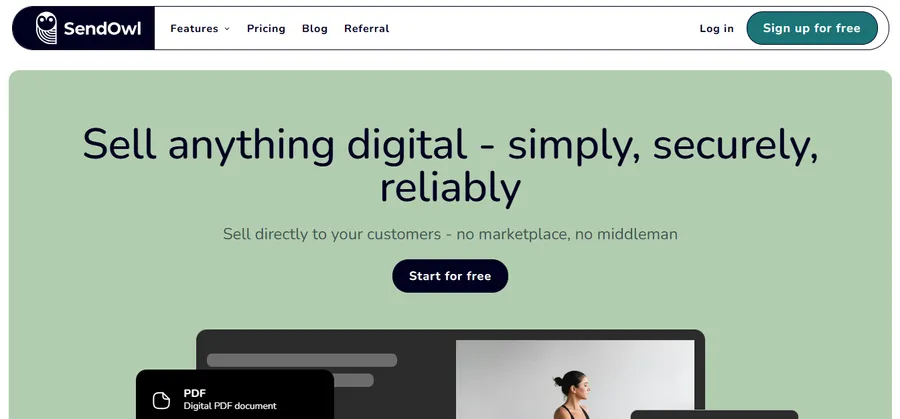
SendOwl is a lightweight digital delivery tool focused specifically on file delivery and payment. It integrates directly with Stripe and PayPal and handles PDF stamping (adding the buyer’s name and email to each PDF page) to reduce unauthorized sharing of your ebook. If you sell premium content where file security matters, SendOwl’s stamping feature is worth the monthly fee.
Plans start at $18 per month with no additional transaction fee on most plans. SendOwl does not have a built-in storefront, so it works best when embedded into an existing website or linked from a social profile.
3+ Best Marketplaces to Sell ebooks
Marketplaces are the right answer to where to sell ebooks if you need built-in traffic and are willing to accept lower margins in exchange for discovery.
Amazon Kindle Direct Publishing (KDP)
Amazon KDP is the largest single platform for ebook distribution in the world. Publishing your ebook on KDP gives you access to Kindle readers, Kindle Unlimited subscribers, and Amazon’s product search results.
Royalty rates are 35 or 70 percent depending on your pricing and whether you enroll in KDP Select. KDP Select requires 90-day exclusivity to Amazon’s Kindle platform, which means you cannot sell the same ebook on other platforms during that period. The trade-off is access to Kindle Unlimited page reads, which pays a per-page rate based on a monthly pool shared among all enrolled books.
For non-fiction guides, how-to books, and educational content, Amazon KDP is a strong starting point because buyers search for specific topics by keyword directly in the Amazon search bar.
Apple Books for Authors
Apple Books offers a 70 percent royalty on all sales with no enrollment exclusivity requirement. You can distribute through Apple Books while selling the same title elsewhere. Apple Books reaches a different audience than Amazon, particularly Mac and iPhone users who prefer the native Books app over Kindle.
Uploading to Apple Books requires either Apple Books for Authors (free) or a distributor like Draft2Digital. Draft2Digital also distributes to Barnes and Noble, Kobo, and several library platforms from a single upload, which is an efficient way to reach multiple marketplaces without managing each one separately.
Etsy
Etsy is an often-overlooked platform for ebook sales, particularly for planners, workbooks, journals, and templates bundled as PDF downloads. The platform has a large and active buyer base for digital products, and Etsy’s internal search can surface your listing to buyers who had no prior awareness of you.
Etsy charges a $0.20 listing fee per item plus a 6.5 percent transaction fee and payment processing fees. Margins are lower than direct sales, but Etsy’s marketplace discovery can generate consistent passive income for ebooks in the right category.
How to Sell ebooks On Your Own Website
Selling from your own website is the best place to sell ebooks for long-term revenue because you keep the highest margin and own every customer relationship. The setup requires more work upfront, but the compounding benefit of building an email list with every sale makes it the most valuable approach over time.
Using WordPress with an LMS or ecommerce plugin
WordPress gives you the most flexibility for selling ebooks. With a plugin like WooCommerce, you can list your ebook as a digital product, set pricing tiers, apply discount codes, and integrate with any email marketing platform.
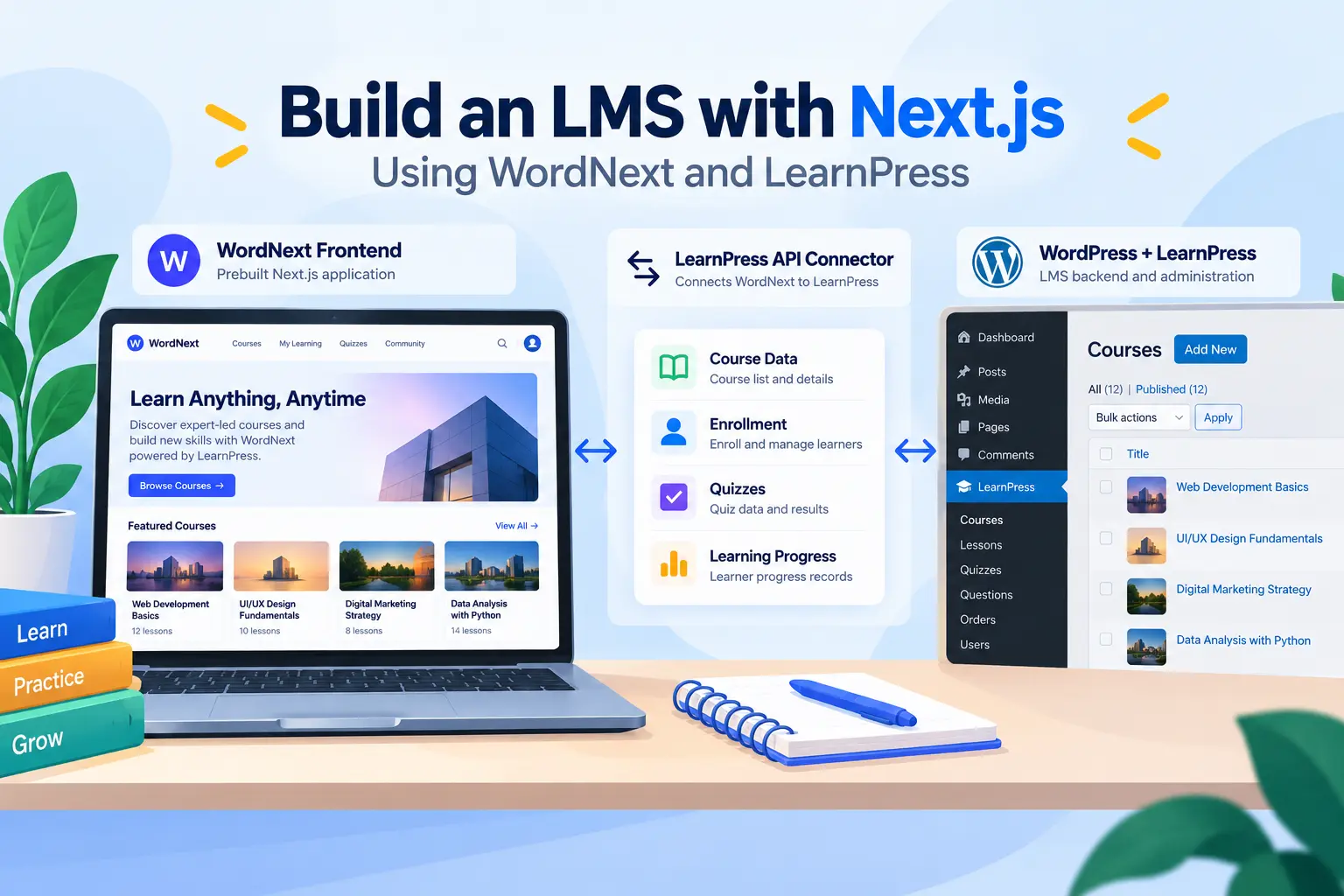
For educators and course creators who want to sell ebooks as part of a broader learning experience, LearnPress is a purpose-built WordPress LMS that lets you bundle ebooks, lessons, quizzes, and certificates into a single purchasable course. LearnPress integrates with WooCommerce and major payment gateways, so you can offer a complete learning product, including an accompanying ebook, without juggling multiple plugins or platforms.
The advantage of selling through WordPress is that your checkout, your customer data, and your delivery system are all under your control. You are not subject to policy changes, algorithm shifts, or sudden fee increases from a third-party marketplace.
Using Shopify
Shopify works well for selling ebooks if you already operate a Shopify store for physical products or merchandise. You can add a digital product using an app like Sky Pilot or Single, which handles automated file delivery after purchase.
The main reason to use Shopify for ebooks specifically, rather than a dedicated digital product platform, is if you want to cross-sell an ebook with a physical product in the same checkout. If you sell workbooks in print and digital formats, or branded merchandise alongside educational content, Shopify is a natural fit.
Comparing The Best Place to Sell ebooks By Use Case
Choosing where to sell ebooks online depends on your specific situation. Here is a direct comparison to help you decide.
| Use case | Best platform | Why |
| First ebook, no existing audience | Amazon KDP or Etsy | Built-in search traffic reduces reliance on your own marketing |
| Growing audience on social media | Gumroad or Payhip | Fast setup, direct payment, no monthly fee on entry plans |
| International sales with tax compliance | Lemon Squeezy | Handles global tax as merchant of record automatically |
| Educator selling ebooks with courses | WordPress with LearnPress | Bundle ebooks with curriculum, certificates, and community |
| Existing Shopify store | Shopify with Sky Pilot | Unified checkout for physical and digital products |
| High-volume seller wanting no transaction fees | Payhip Pro or WooCommerce | Eliminate per-transaction fees above a revenue threshold |
| Premium ebook with piracy concerns | SendOwl | PDF stamping adds buyer identity to each downloaded copy |
| Wide marketplace distribution | Draft2Digital | Single upload distributes to Apple Books, Kobo, B&N, and more |
What to Set up Before You List Your ebook for Sale
Regardless of which platform you choose to sell your ebook, the following elements must be in place before your first sale.
A clean, formatted file
Most buyers expect a PDF as the default delivery format. EPUB is standard for platforms that distribute to ereader apps like Kindle and Apple Books. If you are selling through a marketplace, follow the platform’s specific formatting guidelines. Amazon KDP, for example, has strict rules about fonts, image resolution, and table of contents structure that affect how your book displays on Kindle devices.
For direct sales, a professionally formatted PDF with clickable headings, consistent fonts, and a branded cover converts better than a document exported directly from a word processor without any design work.
A compelling cover
Buyers judge ebooks by their covers, even in digital formats. Your cover appears in search results on marketplaces, in social media posts, and on your own product page. A clear, readable title and a professional design signal that the content inside is worth the price you are asking.
You do not need to hire an expensive designer. Tools like Canva have ebook cover templates that, with some customization, produce a result that is professional enough for most markets.
A product description optimized for search
On marketplaces, your product description is effectively a search listing. Include the specific terms buyers use to search for content like yours. If your ebook teaches financial planning for freelancers, your description should include phrases like “freelance finances,” “self-employed budgeting,” and “tax planning for freelancers,” because those are the terms potential buyers type into Amazon or Etsy search.
On a direct-sale platform or your own website, the description is a sales page. It should lead with the specific outcome the buyer gets, address the most common objections, and end with a clear call to action.
A delivery and refund policy
Digital products are generally non-refundable, but that policy must be stated clearly at checkout to avoid payment disputes. Most platforms have a default policy you can customize. State your refund terms on your product page and in your purchase confirmation email.
An email list integration
Every ebook sale is an opportunity to start a long-term relationship with a buyer. Set up an email marketing integration so that each purchase automatically adds the buyer to a list or welcome sequence. Platforms like Payhip, Gumroad, and LearnPress all support direct integration with tools like Mailchimp, ConvertKit, and ActiveCampaign.
Buyers who receive useful follow-up content after a purchase are significantly more likely to buy your next ebook, upgrade to a course, or recommend your work to others.
FAQs
Can I sell ebooks on multiple platforms at the same time?
Yes, in most cases you can list the same ebook on multiple platforms simultaneously. The main exception is Amazon KDP Select enrollment, which requires 90-day exclusivity to the Kindle platform. If you are not enrolled in KDP Select, you are free to sell the same ebook on your own website, Payhip, Apple Books, and Etsy at the same time. Many creators use a multi-channel approach: they sell direct for the highest margin and list on marketplaces for additional discovery.
Do I need an ISBN to sell an ebook online?
You do not need an ISBN to sell an ebook through most direct-sale platforms or your own website. Amazon KDP and Apple Books assign their own internal identifiers. If you want to distribute widely through library systems or traditional book retailers, an ISBN becomes useful but is still not mandatory for digital-only sales. In many countries, ISBNs are available free of charge through the national ISBN agency.
How much does it cost to start selling ebooks online?
You can start selling ebooks for free on platforms like Amazon KDP, Gumroad’s free plan, or Payhip’s free plan. The main costs to budget for are a domain name and hosting if you sell from your own website (typically $50 to $150 per year), a cover design (free with Canva, or $30 to $100 for a template), and email marketing software once your list grows past the free tier. The total barrier to entry is low enough that most creators can launch their first ebook sale for under $20.
What is the best file format for selling ebooks?
PDF is the most universally compatible format and works for ebooks sold directly to buyers on any device. EPUB is the standard format for ebooks distributed through marketplaces like Apple Books, Kobo, and Barnes and Noble, because it reflows text to fit any screen size. Amazon KDP uses its own MOBI and KFX formats, but the platform automatically converts a submitted EPUB or Word document. For direct sales on your own site or a platform like Gumroad, PDF is the safest default choice because buyers can open it immediately without any app or device requirement.
Conclusion
The best platform to sell ebooks is the one that matches where you are right now: your audience size, your marketing capacity, and how much revenue control you need. Marketplaces like Amazon KDP and Etsy reduce the marketing workload but take a larger share of each sale. Direct-sale tools like Gumroad, Payhip, and Lemon Squeezy give you higher margins and customer data in exchange for driving your own traffic. Selling from your own WordPress site offers the highest long-term return, especially when you bundle ebooks with courses, lessons, or community access.
One practical approach many creators use is to launch on one direct-sale platform first, such as Gumroad or Payhip, to validate pricing and demand quickly. Once the ebook is generating consistent sales and you have collected early buyer feedback, you can expand to a marketplace for additional discovery or migrate to a self-hosted WordPress setup with an LMS like LearnPress to build a more complete product offering around it.
Pricing is also worth revisiting regularly. The best platform to sell ebooks is not always the one with the lowest fees. A platform that converts 30 percent better at checkout, even with a slightly higher transaction fee, will outperform a cheaper platform that loses buyers at the payment step. Most direct-sale platforms offer analytics dashboards where you can track conversion rates, abandoned checkouts, and revenue per visitor. Use that data to make pricing and placement decisions rather than guessing.
Start with one platform, test your pricing and product description, and expand to additional channels once you have your first sales and some buyer feedback. The mechanics of where to sell ebooks online matter less than the quality of the ebook itself and the specificity of the problem it solves for the right reader.
Read more: WordPress LMS Membership: The Powerful 5-Step New Add-on Guide