
Choosing the best platform to sell digital products is harder than it looks. Ebooks, templates, presets, software, and courses all need different tools, and the wrong pick can take 10% of every sale or force you to rebuild your store a year later.
This guide compares ten of the best platforms to sell online, with fee math checked in October 2026, so you can match a platform to your product, your budget, and the amount of control you want.
LearnPress – WordPress LMS Plugin
We provide an amazing WordPress LMS plugin to create & sell online courses. Let’s find out!
Try NowQuick answer: For most sellers who want a store they fully own, WordPress with WooCommerce or Easy Digital Downloads is the best platform to sell digital products. For a fast launch with no site to maintain, Payhip, Sellfy, or Gumroad get you selling in an afternoon.
Table of Contents
What is the best platform to sell digital products?
The best platform to sell digital products is the one that fits how you sell, not the one with the longest feature list. A digital product platform is a service or software that stores your files, takes payment, and delivers the download to the buyer automatically. Some do only that. Others add email marketing, course lessons, affiliate programs, or tax handling.
There are three broad types, and the right choice depends on which one matches you.
- Self-hosted stores run on your own website. WordPress with WooCommerce, Easy Digital Downloads, and LearnPress belong here. You pay for hosting and you do some setup, but you control the design, the data, and the checkout.
- Hosted creator platforms give you a ready-made store. Shopify, Gumroad, Payhip, Sellfy, and Podia work this way. You sign up, upload a file, and share a link.
- Marketplaces and merchant-of-record services bring built-in buyers or handle global tax for you. Etsy is the marketplace example. Lemon Squeezy is the merchant-of-record example. A merchant of record is the company that legally sells your product to the customer and handles sales tax and VAT on your behalf.
If you are comparing platforms to sell online for the first time, start by asking two questions. Do you want to own your store and customer list? And do you want to pay a monthly fee, a per-sale fee, or both? Your answers narrow the list fast.
How we compared these platforms
Every one of the best platforms to sell digital products online in this article is judged on the same five points: fees, ease of setup, digital delivery features, growth tools, and long-term flexibility. We looked at each platform’s published pricing and fee policy, then compared them using the same example sale so the numbers line up. Where a figure comes from a third party, we name the source in the text.
Prices change often. Treat every number here as an October 2026 snapshot and confirm it on the platform’s pricing page before you commit.
Best websites to sell digital products compared at a glance
The table below puts the best websites to sell digital products side by side. Platform fees are what the platform itself charges. Card processing from Stripe or PayPal is usually extra, and Stripe’s standard US rate is 2.9% plus 30 cents per online payment.
| Platform | Type | Starting cost | Platform fee per sale | Best for |
|---|---|---|---|---|
| WooCommerce | Self-hosted (WordPress) | Free plugin, plus hosting | 0% | Full control and custom stores |
| Easy Digital Downloads | Self-hosted (WordPress) | Free core plugin, plus hosting | 0% | Software, files, and licenses |
| LearnPress + Eduma | Self-hosted (WordPress) | Free LMS plugin, plus hosting | 0% | Online courses and academies |
| Shopify | Hosted store | $39/month, or $29/month billed yearly | 0% with Shopify Payments, extra with other gateways | Brands selling digital and physical items |
| Gumroad | Hosted creator platform | Free | 10% + $0.50 direct, 30% via Discover | Solo creators testing a first product |
| Payhip | Hosted creator platform | Free, or $29 or $99/month | 5%, 2%, or 0% by plan | Low-cost start with EU VAT handled |
| Sellfy | Hosted creator platform | From about $29/month | 0% | Creators who want email tools and 0% fees |
| Podia | Hosted creator platform | From about $33 to $39/month | 0% on paid plans | Courses, memberships, and downloads |
| Lemon Squeezy | Merchant of record | Free | 5% + $0.50 | Software and global tax handling |
| Etsy | Marketplace | Free to open | $0.20 listing + 6.5% + processing | Printables, planners, and templates |
Best platforms for sellers who want full control
If you want to own your store, your customer emails, and your brand, a self-hosted setup is the strongest route. These are the best online platforms to sell products when you want to avoid per-sale platform fees, though they cost more time up front.
WordPress with WooCommerce
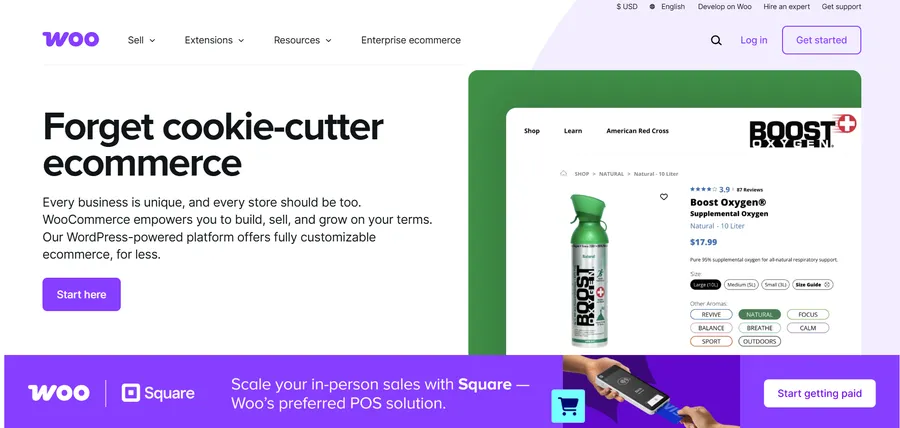
WooCommerce is a free WordPress plugin that turns your site into a store, and it supports downloadable products out of the box. In the product editor you tick the “Downloadable” box, upload your file, and set a download limit and expiry. Buyers get the link on the order confirmation page and in the order email.
The big advantage is that WooCommerce takes no cut of your sales. You pay for hosting, a domain, and your payment gateway, such as Stripe or PayPal. You can also add subscriptions, coupons, upsells, and bundles with extensions. Because it runs on WordPress, you can write blog posts, build landing pages, and rank for search terms that bring buyers in for free. That makes it one of the best platforms to sell online if you care about search traffic.
The trade-off is maintenance. You handle updates, backups, security, and page speed yourself. A cheap shared host with too many plugins can push your Largest Contentful Paint past 4 seconds, which hurts both sales and rankings. Use a caching plugin, keep your plugin list short, and test the checkout on mobile before launch.
Best for: sellers who want a flexible store that can grow into a full business site.
Easy Digital Downloads
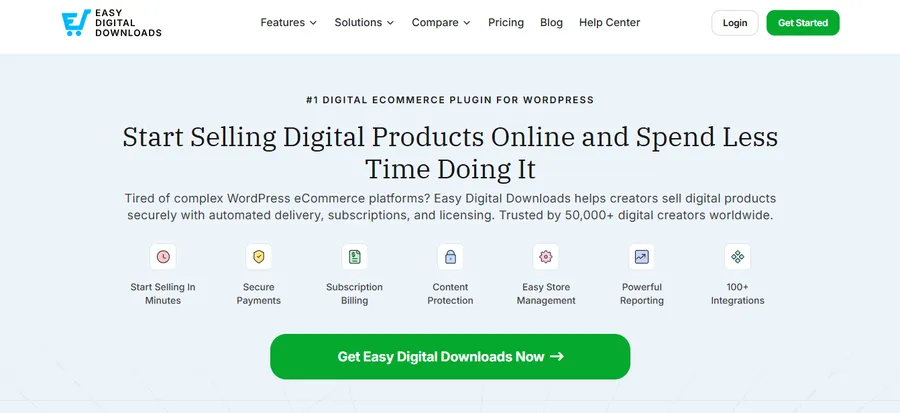
Easy Digital Downloads, or EDD, is a WordPress plugin built only for digital products. Where WooCommerce tries to handle everything, EDD focuses on files, licenses, and downloads. The core plugin is free, and paid extensions add features such as software licensing, recurring payments, and advanced reports.
Its dashboard is simpler than WooCommerce because it does not carry shipping or inventory settings you will never use. That makes it a good fit for people selling ebooks, plugins, themes, fonts, photos, or software, and one of the best websites to sell digital products on WordPress. The checkout is clean, download links are protected, and you can set file download limits per purchase.
Like WooCommerce, EDD charges no platform fee. Your costs are hosting, any paid extensions, and payment processing. The main limit is scope. If you later want to sell physical goods, you will probably need to switch or add another plugin.
Best for: developers, designers, and writers who only sell digital files.
WordPress with LearnPress and Eduma

If your digital product is a course, a lesson series, or a training program, a file download store is the wrong tool. LearnPress is a free WordPress LMS plugin from ThimPress that lets you build courses with lessons, quizzes, and student progress tracking. Paid add-ons connect it to WooCommerce, Stripe, PayPal, and other gateways so you can charge for access.
Eduma is the education theme built to work with LearnPress. It gives you ready-made demo layouts for online academies, course marketplaces, and training centers, so you do not start from a blank page. Because everything runs on your own WordPress site, you keep student data, set your own prices, and pay no marketplace commission.
This is the setup to consider if you plan to sell courses in the long term. Marketplaces like Udemy decide your pricing and own the student relationship. With LearnPress and Eduma, you own both. The cost is that you must market the site yourself and handle hosting and updates.
Best for: course creators, tutors, and training companies who want their own online academy.
Shopify

Shopify is a hosted store builder that handles hosting, security, and checkout for you. As of 2026, the Basic plan costs $39 per month on monthly billing, or $29 per month when billed yearly, and a $5 Starter plan covers selling through links and social media. Shopify does not sell digital files by default, so you add a digital downloads app from the Shopify App Store to deliver files after purchase.
Shopify shines when you sell both digital and physical products, such as a printed planner and its PDF version. You also get strong abandoned cart emails, discount codes, and a large app and theme library. Shopify Payments carries no extra transaction fee, but using a third-party gateway adds one, so check the rate on your plan.
The downside is cost. Between the monthly plan, the app subscription, and a premium theme, a digital-only seller can pay more than on a simple creator platform. Shopify is the best platform to sell digital products when your plan is a real brand, not a single ebook.
Best for: brands that sell digital and physical products from one store.
Best platforms for a fast, simple launch
These tools skip the website building. You upload a file, set a price, and get a checkout link. They are popular because a first-time seller can go live in under an hour, and this group holds the best site to sell digital products for anyone who values speed.
Gumroad
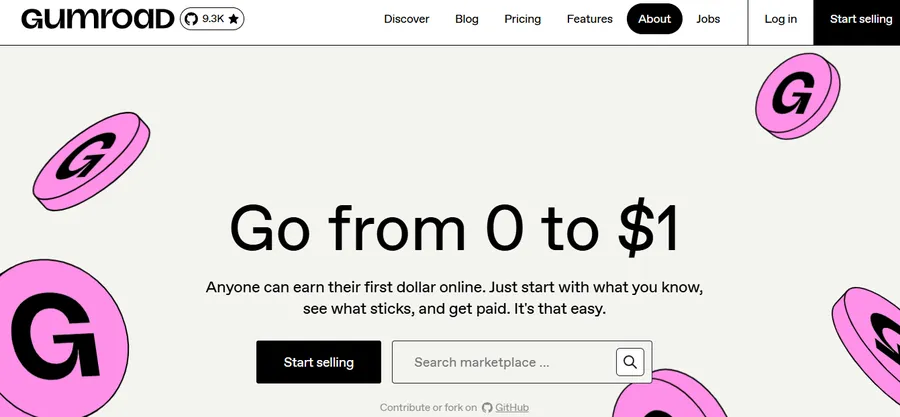
Gumroad is often named the best site to sell digital products for beginners, and it is free to open. There is no monthly fee. Instead, Gumroad takes 10% plus 50 cents on direct sales, and 30% on sales that come through its Discover marketplace, according to published 2026 fee breakdowns. Stripe or PayPal processing fees are added on top in most calculations, and Gumroad does not refund its fee when you refund a customer.
The appeal is speed. You can sell ebooks, music, templates, software, and memberships from a profile page or an embedded checkout. Gumroad pays out weekly and has handled global sales tax collection since 2025, which removes a headache for solo sellers.
The weak spot is the fixed 50 cents. On a $10 product, Gumroad’s platform fee alone is $1.50, or 15% of the price. At higher volume the 10% adds up fast. Many sellers start on Gumroad and move to a cheaper option once monthly sales grow.
Best for: beginners who want zero upfront cost and a simple checkout link.
Payhip
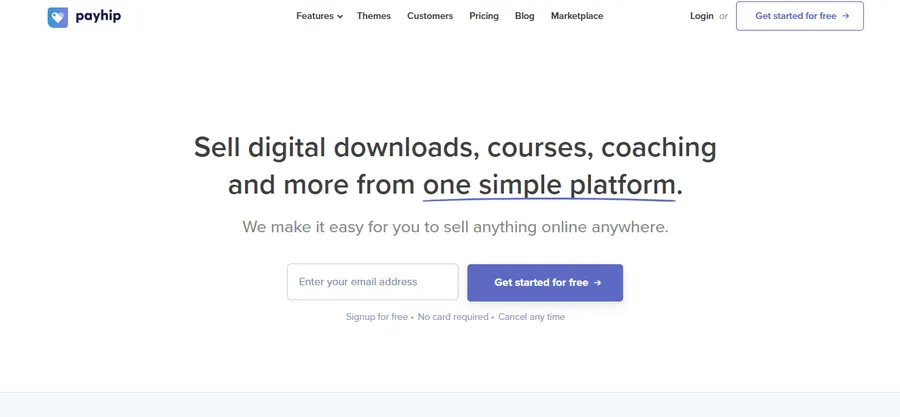
Payhip is a close Gumroad competitor with a more flexible fee ladder. It runs three plans: Free Forever at $0 per month with a 5% transaction fee, Plus at $29 per month with 2%, and Pro at $99 per month with 0%, based on Payhip’s own pricing. Card processing from Stripe or PayPal still applies on every plan.
You can sell digital downloads, courses, memberships, and coaching sessions. Payhip also includes discount codes, an affiliate program, and email tools. One detail that stands out is that Payhip handles EU and UK VAT automatically on all plans, which saves real time if your buyers are in Europe.
The design options are less polished than Sellfy or Shopify, so your store may look plain without some effort. Still, the free plan makes Payhip the best site to sell digital products when you only want to test an idea. Move to Plus once your monthly sales make the 3% saving worth the $29 fee. For European sellers, it ranks among the best platforms to sell digital products online.
Best for: sellers with European customers who want a free start and an easy upgrade path.
Sellfy
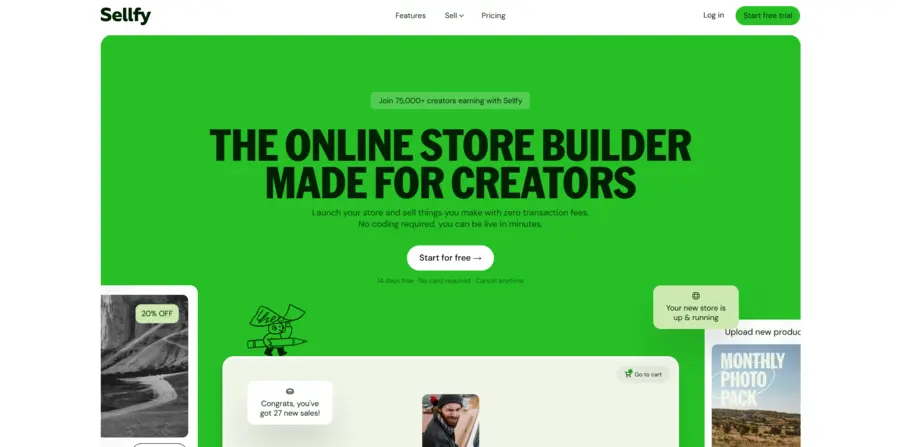
Sellfy charges a flat monthly subscription and takes 0% in transaction fees on every plan. Entry pricing is about $29 per month on monthly billing and about $22 per month billed yearly, according to Sellfy’s own figures. There is no free plan, but there is a 14-day trial.
Sellfy lets you sell digital downloads, subscriptions, and print-on-demand merchandise from one storefront. Built-in email marketing, upsells, and cart abandonment tools are included, which many hosted platforms charge extra for. Stores look clean and work well on mobile, which is why Sellfy is among the best online platforms to sell products on a flat budget.
Two limits matter. Plans have an annual sales cap, so very large stores must talk to Sellfy about custom pricing. And you, not Sellfy, are the merchant of record, so you are responsible for collecting and filing sales tax and VAT. For sellers earning a steady few hundred dollars a month, the flat fee often beats percentage-based platforms.
Best for: creators who want predictable costs and built-in email marketing.
Podia
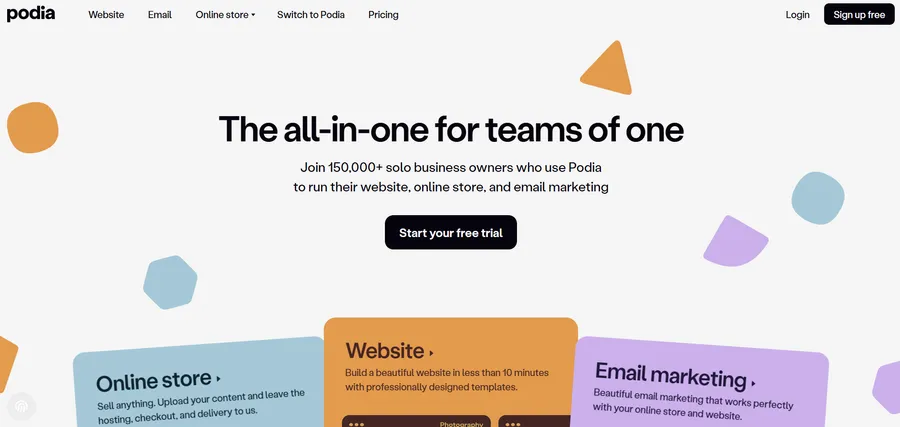
Podia bundles courses, memberships, digital downloads, a website, and email marketing into one flat monthly plan. Paid plans carry no transaction fees and start at roughly $33 per month billed yearly, or $39 on monthly billing, depending on the review source and billing cycle you check.
It is one of the best online platforms to sell products when your audience expects a learning experience, such as a mini-course plus a template pack. The editor is easy to use, onboarding is friendly, and the help center is thorough. You can bundle products, set up a community, and send newsletters without connecting extra tools.
The main trade-off is price. Podia costs more than free-to-start options, and its design control is narrower than a self-hosted WordPress site. If you only sell a handful of PDFs, you may not use enough of its features to justify the monthly fee.
Best for: educators and coaches who sell courses, memberships, and downloads together.
Best marketplaces and tax-handling platforms
Some sellers care less about owning a store and more about reaching buyers or avoiding tax paperwork. These two options solve those problems in different ways.
Lemon Squeezy
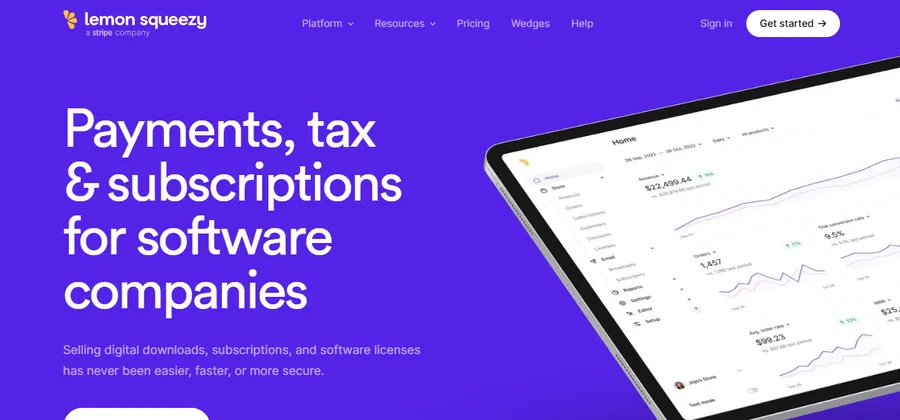
Lemon Squeezy is a merchant-of-record platform built for software and digital products. It acts as the legal seller, so it collects and remits sales tax and VAT in supported regions and handles fraud and chargebacks. Its standard price is 5% plus 50 cents per transaction with no monthly fee, though extra charges can apply on international sales and payouts.
Stripe acquired Lemon Squeezy in July 2024, and in 2026 Stripe introduced Stripe Managed Payments, its own merchant-of-record product, with the same headline rate. Because the setup has been shifting, check whether Lemon Squeezy is accepting new sellers before you plan around it, since reports in mid-2026 describe waitlists and changing access.
You get hosted checkout, license key delivery, subscriptions, and affiliate tools. The cost is higher than using Stripe directly at 2.9% plus 30 cents, but you skip global tax registration, which is a real saving for a solo developer selling to buyers in many countries.
Best for: software sellers and indie developers who want tax compliance handled for them.
Etsy

Etsy is a marketplace with millions of active buyers, which means you get traffic you did not have to build. It is one of the best platforms to sell online for printables, planners, wall art, Canva templates, and SVG files. Digital items pay the same fees as physical ones: a $0.20 listing fee, a 6.5% transaction fee on the order total, and US payment processing of 3% plus 25 cents, per Etsy’s fees policy.
On a $100 sale, Etsy takes $9.95 in total fees, according to a 2026 fee calculator that applies the published rates. If a buyer arrives through an Etsy-placed ad, an Offsite Ads fee of 15% can apply for smaller shops, and some sellers cannot opt out.
Etsy works best when you sell many small, searchable items and bundle them to lift the average order value. The downside is that you do not own the customer relationship, competition is heavy, and a policy change can affect your shop overnight. Many sellers use Etsy for discovery and send repeat buyers to their own store.
Best for: sellers of low-priced printables and templates who need built-in traffic.
What a $20 sale really costs on the best platforms to sell online
Fees look small until you do the math. The table below shows the platform fee on one $20 digital sale. It leaves out card processing, which adds roughly $0.88 per sale on Stripe’s standard US rate of 2.9% plus 30 cents, except where noted.
| Platform | Platform fee on a $20 sale | You keep before card processing |
|---|---|---|
| WooCommerce or EDD | $0.00 | $20.00 |
| LearnPress + Eduma | $0.00 | $20.00 |
| Sellfy (flat monthly fee) | $0.00 | $20.00 |
| Podia (paid plan) | $0.00 | $20.00 |
| Payhip Plus (2%) | $0.40 | $19.60 |
| Payhip Free (5%) | $1.00 | $19.00 |
| Lemon Squeezy (5% + $0.50) | $1.50 | $18.50 |
| Etsy ($0.20 + 6.5%), plus $0.85 processing | $1.50 | $18.50, then $17.65 after processing |
| Gumroad direct (10% + $0.50) | $2.50 | $17.50 |
Monthly subscriptions change the picture. Sellfy at about $29 per month is cheaper than Gumroad once you sell roughly 12 products at $20 in a month, because Gumroad would take about $30 on those sales. Payhip Pro at $99 per month only makes sense when percentage fees would exceed that amount. Run your own numbers using your average price and expected monthly orders.
How to choose the right platform
The best platforms to sell digital products online are the ones that match your stage. Use the points below to decide, then re-check once or twice a year as your sales grow.
Match the platform to your product
Single files like ebooks, presets, and templates work on almost any option. Courses need lesson structure, so look at LearnPress with Eduma, Podia, or Payhip. Software needs license keys and tax handling, so look at EDD or Lemon Squeezy. Physical and digital mixes point to Shopify or WooCommerce.
Decide how much work you can handle
A self-hosted WordPress store gives the most freedom but needs hosting, updates, and backups. If you do not want to touch a server, pick a hosted tool. Be honest about your time. A store you never finish building earns nothing.
Look at the full cost, not the headline
Add the monthly fee, the per-sale fee, card processing, payout fees, and any apps or extensions. Even the best websites to sell digital products can hide costs in apps and payout fees. A free plan with a 10% cut costs more than a $29 plan once you pass a few hundred dollars a month in sales.
Think about taxes before your first international sale
Selling digital goods to EU, UK, or Australian buyers can create VAT or GST duties, even for small sellers. Payhip handles EU and UK VAT, Lemon Squeezy acts as merchant of record, and Gumroad collects global sales tax. With Sellfy, WooCommerce, EDD, and LearnPress, you manage tax yourself or add a tax plugin. Ask an accountant if you are unsure.
Mistakes to avoid when you start selling
Most problems with the best site to sell digital products come from setup choices, not the platform itself. Avoid these, and even the best platforms to sell digital products online will work harder for you.
- Starting on a marketplace with no plan for repeat buyers. Include a link to your own site or email list inside every download, within the platform’s rules.
- Ignoring small fixed fees. A fixed fee of 25 or 50 cents hurts most on products under $15. Bundle low-priced items into packs so the fee is a smaller slice.
- Not testing the buyer experience. Buy your own product with a real card, open the email on your phone, and check that the download link works. Many sellers find broken links only after a customer complains.
FAQs
Can I sell digital products without a website?
Yes. Gumroad, Payhip, Sellfy, Podia, and Etsy all give you a hosted store page or a checkout link, so you do not need your own website. You can share that link on social media, in an email, or in a video description. A website becomes useful later when you want to rank in search and build your own audience.
Do I have to charge VAT or sales tax on digital products?
Often, yes, depending on where your buyers live. The EU, UK, Australia, and several US states tax digital goods, and the rules can apply even to small sellers. Merchant-of-record platforms such as Lemon Squeezy handle this for you, while self-hosted stores and Sellfy leave it to you. Check the rules in your country or ask a tax professional.
What digital products sell best online?
Templates, printables, planners, ebooks, online courses, stock photos, fonts, presets, and software tools sell well. Products that solve a narrow problem for a specific audience usually beat broad ones. Start with a small product, learn what buyers ask for, and then build bigger bundles or a course.
How much does it cost to start selling digital products?
Many of the best online platforms to sell products cost nothing to open. You can start for $0 on Gumroad, Payhip Free, or Etsy, paying only per-sale fees. A WordPress store costs hosting and a domain, often a few dollars to a few tens of dollars per month depending on your host. Hosted all-in-one plans like Sellfy, Podia, and Shopify start around $22 to $39 per month. Your total depends on how many sales you make.
Conclusion
There is no single winner for everyone, but there is a clear winner for each type of seller. If you want ownership and long-term growth, WordPress with WooCommerce or Easy Digital Downloads is the best platform to sell digital products. If you sell courses, LearnPress with the Eduma theme gives you a full online academy without marketplace commissions. If you want a quick start, Payhip, Sellfy, or Gumroad will get you live fast, and Etsy or Lemon Squeezy help when you need traffic or tax handling.
Of all the best platforms to sell online, start with the one that matches your product and your time, run the fee math on your own prices, and be ready to move as you grow. Fees and plans change, so recheck pricing pages before you commit. Pick the best platform to sell digital products for your situation this week, publish your first product, and learn from your first ten sales.
Read more: How to Choose a Web Based Student Information System?