Sales enablement gives your reps the content, training, and insights they need to close deals faster. The challenge is choosing from dozens of products that all claim to do the same thing.
This guide compares nine of the best sales enablement tools, explains what each one does well, and shows you how to choose based on your team size, tech stack, and goals.
Pricing, features, and plans change often. This guide reflects publicly available vendor information as of October 2026, so confirm details on each vendor’s website before you buy.
LearnPress – WordPress LMS Plugin
We provide an amazing WordPress LMS plugin to create & sell online courses. Let’s find out!
Try NowTable of Contents
What is sales enablement?
Sales enablement is the process of giving sales teams the content, training, tools, and coaching they need to engage buyers and close deals. It covers everything from the first day of onboarding to the final pricing conversation with a prospect.
In simple terms, sales enablement answers one question: what does a rep need, right now, to move this deal forward? The answer might be a case study, a battle card, a short training video, or feedback on a recorded call.
What sales enablement includes
A good sales enablement program usually has four parts. Each one solves a different problem for the team.
- Content management: Reps can find the latest decks, one-pagers, and proposals without searching through shared drives.
- Training and onboarding: New hires learn the product, the pitch, and the sales process in a structured way.
- Coaching and feedback: Managers review calls, score skills, and give specific advice.
- Analytics: Leaders see which content is used, which reps are ready, and which assets help win deals.
Sales enablement vs. sales training
Sales training is one part of sales enablement. Training teaches skills, such as discovery questions or objection handling. Sales enablement also covers the content, the tools, and the data that support those skills in real deals. A training course ends when the lesson is over. Sales enablement continues while the rep is working a live opportunity.
Why sales enablement matters now
Buyers do much of their research before they speak to a rep. That means each conversation has to be relevant and well prepared. Teams that rely on scattered files and informal coaching tend to give inconsistent answers. Reps then spend time hunting for materials instead of selling.
Modern sales enablement technology fixes this by putting content, training, and coaching inside one workflow, often inside the CRM your team already uses.
What are sales enablement platforms and technology?
Sales enablement platforms are software products that bring content, training, coaching, and analytics into one place for sales teams. Sales enablement technology is the wider term. It includes those platforms plus connected tools such as conversation intelligence, e-signature, and knowledge bases.
Most buyers use the words “platform,” “tool,” and “solution” interchangeably. In practice, a platform covers many jobs, while a point tool does one job very well.
Core features to expect
Most sales enablement platforms share a common feature set. Use this list as a baseline when you compare vendors.
- A central content library with search, tagging, and version control
- Sales playbooks and guided selling workflows
- Onboarding paths and learning modules
- Call recording, scoring, and coaching tools
- Content analytics, such as views, shares, and time spent
- CRM integrations with Salesforce, HubSpot, or Microsoft Dynamics
- Buyer-facing features, such as digital sales rooms and trackable links
Platform vs. point tool
A platform suits teams that want one system for content and training. A point tool suits teams that already have strong processes and only need to close one gap. For example, a team with a good content library might only need conversation intelligence. A fast-growing team with no process may need a full platform.
How we evaluated the best sales enablement platforms
We compared each product using public documentation, product pages, and vendor feature lists. We did not run hands-on tests on every platform, so treat this as a research-based buyer’s guide, not a lab review. We scored each tool against the same criteria.
- Content management: How easily reps can find, share, and personalize assets
- Training and coaching: The depth of onboarding, practice, and feedback features
- AI capabilities: How useful the AI features are in daily selling
- Integrations: Native links to CRM, email, calendar, and collaboration tools
- Analytics: The quality of reporting on content, activity, and rep readiness
- Ease of adoption: How quickly a team can start using the product
- Fit: The type of team that gets the most value from the product
Adoption deserves extra attention. A feature-rich platform that reps ignore is a waste of budget, so we gave weight to products that work inside tools reps already open every day.
Sales enablement tools comparison table
The table below summarizes the nine tools in this guide. Pricing for most enterprise platforms is quote-based, so use the table to shortlist and then request current pricing from the vendors.
| Tool | Best for | Standout strength | AI features | Pricing model |
|---|---|---|---|---|
| Highspot | Mid-size to large teams | Content findability and guided selling | AI search, content suggestions, and summaries | Quote-based |
| Seismic | Enterprises with complex content | Content automation and personalization | AI content generation and recommendations | Quote-based |
| HubSpot Sales Hub | Teams already using HubSpot CRM | CRM-native playbooks and content tracking | AI assistant and writing tools | Free tools plus paid tiers |
| Mindtickle | Onboarding and rep readiness | Skills assessments and practice | AI role-play and scoring | Quote-based |
| Showpad | Field sales and complex products | Content plus coaching in one tool | AI content and coaching support | Quote-based |
| Gong | Call coaching and deal visibility | Conversation and deal intelligence | AI call summaries and deal insights | Quote-based |
| Guru | Fast answers inside daily tools | Verified knowledge in Slack, Teams, and browser | AI answers from company knowledge | Per-user plans |
| Allego | Video-based learning and coaching | Practice, content, and coaching together | AI-assisted practice and feedback | Quote-based |
| Outreach | Outbound-heavy sales teams | Sales execution and sequencing | AI prospecting and deal guidance | Quote-based |
The 9 best sales enablement tools in 2026
Each tool below suits a different type of team, so read the “best for” line first. We list the main strengths, the trade-offs, and the kind of buyer who gets the most value.
1. Highspot
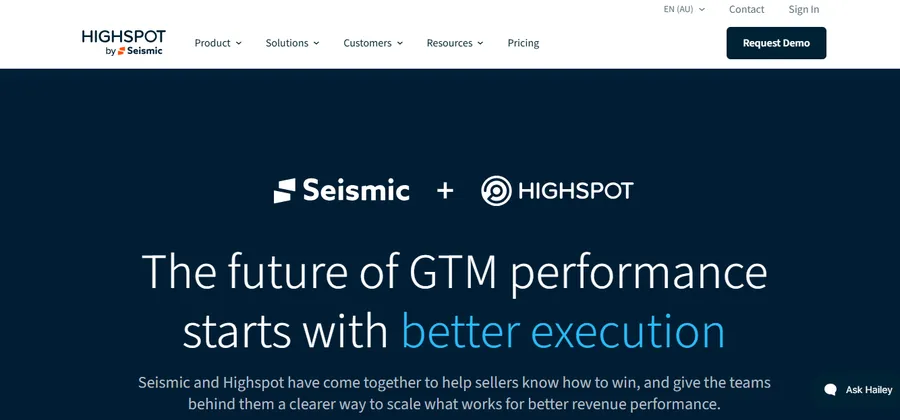
Highspot is a sales enablement platform known for strong content search and guided selling. It helps reps find the right asset quickly and follow a clear plan for each deal stage.
Key features:
- Central content library with smart search
- Sales plays that guide reps through a deal
- Training and coaching modules
- Analytics on content use and buyer engagement
- Integrations with major CRM systems
Pros: Reps tend to find content quickly, and the interface is easy to learn. The analytics show which assets support active deals.
Cons: Pricing is quote-based, and the platform needs content governance to stay clean. Small teams may find it more than they need.
Best for: Mid-size and large teams that want one place for content, plays, and coaching.
2. Seismic
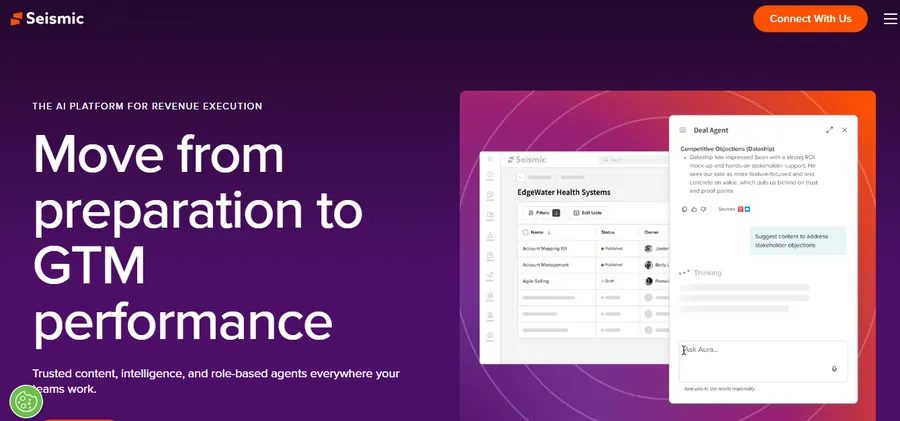
Seismic is built for large organizations that produce a lot of sales and marketing content. It focuses on content automation, so reps can create personalized materials without starting from scratch.
Key features:
- Content management with brand controls
- Automated personalization for decks and documents
- Learning and coaching tools
- Analytics for content performance
- AI features for content creation and recommendations
Pros: Brand and compliance controls are strong, which matters in regulated industries. Personalization at scale saves reps time.
Cons: The setup takes planning, and the cost fits enterprise budgets more than startup budgets.
Best for: Enterprises with many products, regions, or compliance rules.
3. HubSpot Sales Hub
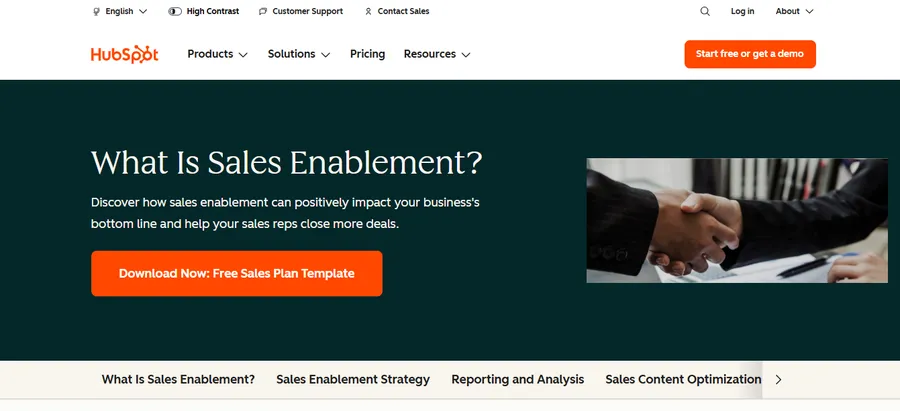
HubSpot Sales Hub is a CRM-based sales platform with built-in enablement features. It lets teams share documents, track engagement, use playbooks, and run sequences from one system.
Key features:
- Document sharing with view tracking
- Playbooks and call guidance inside the CRM
- Email templates and sequences
- Meeting scheduling and call recording
- AI assistant for writing and summaries
Pros: Reps do not need to leave the CRM, which helps adoption. A free tier and paid plans make it easy to start small.
Cons: The most advanced enablement features sit in higher-priced tiers. Dedicated platforms such as Highspot go deeper on content and training.
Best for: Small and mid-size teams that already use HubSpot and want to keep their stack simple.
4. Mindtickle
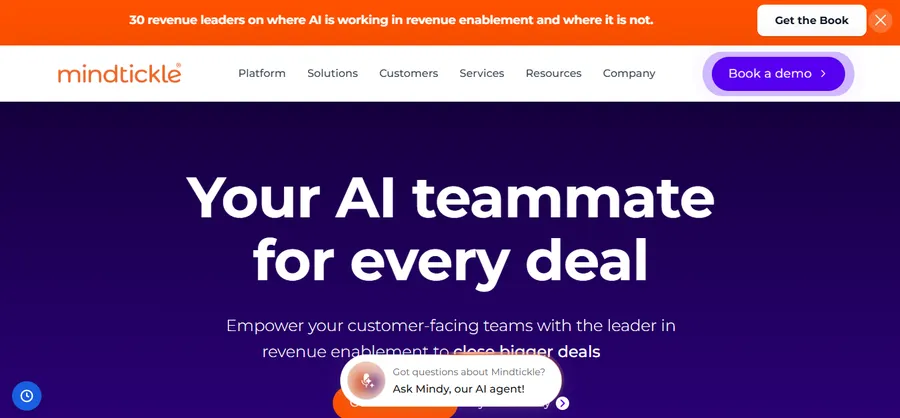
Mindtickle focuses on sales readiness. It helps companies onboard new reps, test their knowledge, and track skill gaps over time.
Key features:
- Structured onboarding and learning paths
- Skills assessments and certifications
- Practice and role-play with AI scoring
- Manager coaching tools
- Readiness reports for sales leaders
Pros: It gives leaders clear data on who is ready to sell. The practice tools help reps build confidence before talking to buyers.
Cons: Its strength is training and readiness, so teams that need a large content library may want to pair it with another tool.
Best for: Companies that hire often and need fast, consistent onboarding.
5. Showpad

Showpad combines content management and coaching in one platform. It is popular with field sales teams that sell complex or technical products.
Key features:
- Content library with offline access
- Digital sales rooms for buyer collaboration
- Coaching and practice tools
- Content analytics
- CRM integrations
Pros: Reps can share content with buyers in an organized way. The mix of content and coaching suits teams that meet customers in person.
Cons: Pricing is quote-based, and some features may need extra configuration to match your process.
Best for: Field sales teams selling complex products, such as medical devices or industrial equipment.
6. Gong
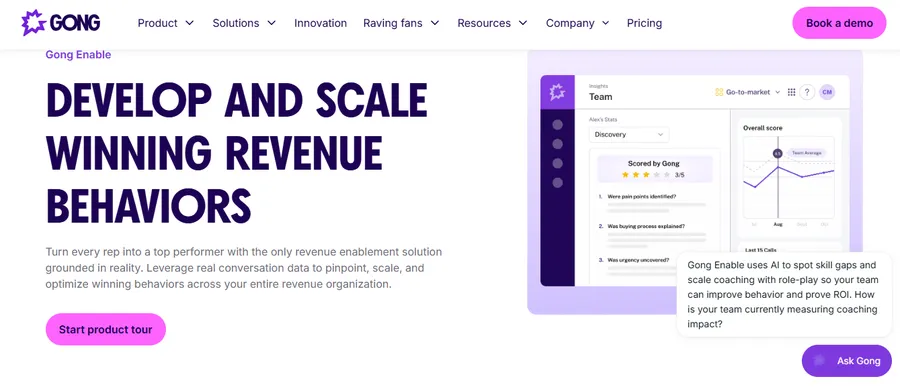
Gong is a revenue intelligence platform that records and analyzes sales calls. It is not a content tool, but it is one of the most useful pieces of sales enablement technology for coaching.
Key features:
- Call and meeting recording
- AI call summaries and topic tracking
- Deal intelligence and risk signals
- Coaching scorecards
- Forecasting support
Pros: Managers can find coaching moments quickly instead of listening to full calls. Leaders can spot patterns in what top reps say.
Cons: It does not manage sales content or run structured training courses. Most teams use it alongside another platform.
Best for: Teams that want to improve calls, coaching, and deal visibility.
7. Guru
Guru is a knowledge management tool that delivers verified answers inside the apps reps already use, such as Slack, Microsoft Teams, and the browser.
Key features:
- Company knowledge base with expert verification
- Browser extension and chat integrations
- AI answers based on approved company content
- Alerts when information becomes outdated
- Simple content cards for battle cards and FAQs
Pros: Reps get quick answers without leaving their workflow. The verification process keeps information trustworthy.
Cons: It is not a full training or coaching platform. Teams with heavy onboarding needs may need an additional tool.
Best for: Teams that lose time answering the same product and pricing questions.
8. Allego
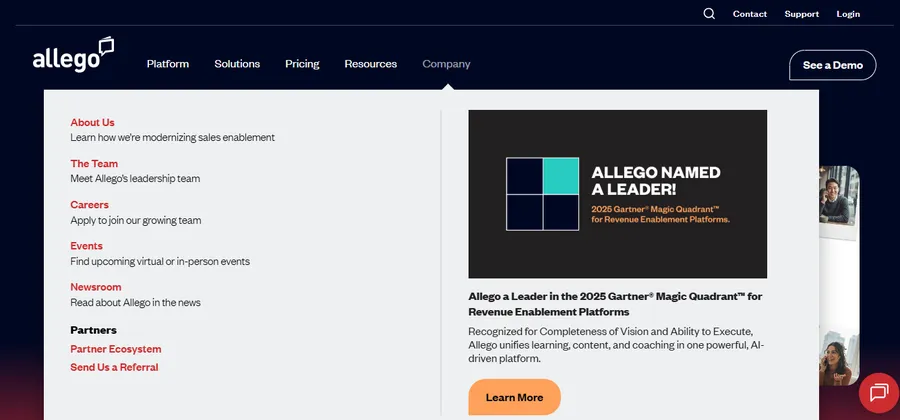
Allego is a sales enablement platform with a strong focus on video-based learning and practice. Reps can record pitches, get feedback, and build skills in a structured way.
Key features:
- Video practice and peer feedback
- Content library and sharing tools
- Coaching workflows for managers
- Learning paths for onboarding
- Analytics on rep activity and content use
Pros: The practice features help reps rehearse real conversations. It suits remote and hybrid teams that cannot train in person.
Cons: Quote-based pricing and a feature-rich interface mean new admins need time to set it up well.
Best for: Teams that want to build pitch skills through practice and feedback.
9. Outreach
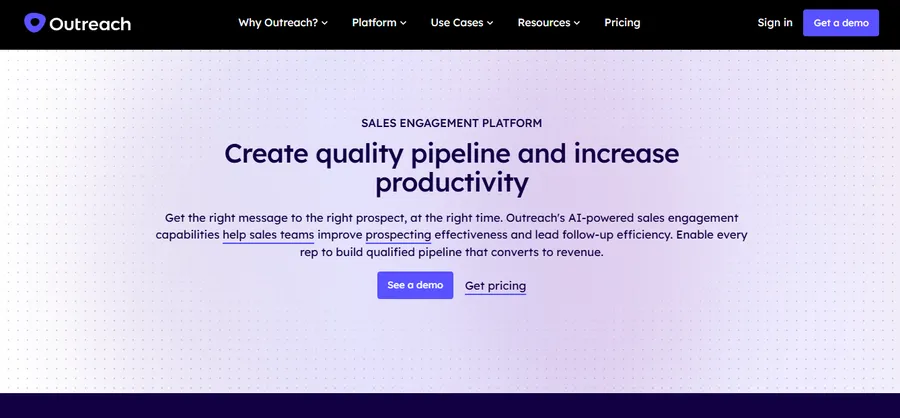
Outreach is a sales execution platform. It helps reps run sequences, manage pipelines, and use AI guidance for prospecting and deal management. It supports sales enablement by turning best practices into repeatable daily actions.
Key features:
- Multi-channel sequences for email, calls, and tasks
- AI prospecting and deal guidance
- Pipeline and forecast views
- Conversation insights
- Integrations with CRM and communication tools
Pros: Managers can build proven outreach patterns once and share them across the team. Reps follow a clear process without guessing the next step.
Cons: It is stronger at execution than at content or training. Pair it with a learning or content tool for a complete setup.
Best for: Outbound-heavy teams that want to scale a repeatable sales motion.
AI sales enablement tools: what to expect
AI sales enablement tools use machine learning to help reps find content, prepare for calls, and get coaching without waiting for a manager. Almost every major vendor now offers AI features, but the quality and usefulness vary widely.
Where AI helps most
AI is most useful when it removes small, repeated tasks. In practice, these are the areas where teams see the most value.
- Content search and summaries: Reps ask a question and get the right asset or a short summary.
- Call summaries: Meetings are turned into notes, action items, and CRM updates.
- Practice and role-play: Reps rehearse a pitch with an AI buyer and receive feedback.
- Content creation: Reps adapt a case study or email to a specific prospect in minutes.
- Deal insights: Tools flag risks, such as no contact with a decision maker.
Where to be careful
AI output is only as good as the content behind it. If your library has outdated or conflicting documents, the AI will surface them. Review AI-written messages before sending, and check where each vendor stores your data. Ask vendors how they handle privacy, and confirm that your company data is not used in ways your legal team has not approved.
How to test AI features before you buy
Ask each vendor for a trial or a live demo using your own content. Give the AI three real questions your reps ask every week, such as “How do we compare to Competitor X on pricing?” Then check whether the answers are accurate and sourced. This simple test tells you more than any feature list.
How to choose a sales enablement solution
The right sales enablement solution matches your team’s biggest problem today, not the longest feature list. Start by naming that problem, then work through the steps below.
Step 1: define your goal
Pick one or two goals to start. Examples include shortening onboarding time, improving content use, raising win rates, or improving call quality. A clear goal makes vendor demos easier to judge.
Step 2: map your current tools
List the CRM, email, chat, and learning tools your team already uses. The best sales enablement platforms connect to these tools without custom work. If a vendor cannot integrate with your CRM, remove it from your shortlist.
Step 3: involve reps and managers
Ask a few reps and one or two managers to join the demos. Reps will tell you quickly whether a tool feels easy or annoying. Adoption is the biggest factor in whether sales enablement software pays off.
Step 4: compare total cost
Look beyond the license fee. Ask about onboarding costs, support plans, extra modules, and the price of adding users. Many platforms are priced by seat or by package, so the total can change as your team grows.
Step 5: run a pilot
Test the tool with one team for 30 to 60 days. Track simple measures, such as time to find content, ramp time for new hires, and manager coaching time. Use the results to support your final decision.
Quick recommendations by team type
- Small team on HubSpot: Start with HubSpot Sales Hub.
- Large enterprise with heavy content needs: Compare Seismic and Highspot.
- Fast-growing team that hires often: Look at Mindtickle or Allego.
- Coaching and deal visibility focus: Add Gong.
- Knowledge and quick answers focus: Try Guru.
- Outbound-heavy motion: Consider Outreach.
Build your own sales training with LearnPress or Eduma
If your main gap is training rather than content or call analysis, you may not need a large platform. You can build a custom sales academy on your own WordPress site and keep full control of your content.
LearnPress is a free WordPress LMS plugin from ThimPress that lets you create courses, lessons, and quizzes. A sales team can use it for onboarding, product training, and certification tests. You can group lessons into a course, add quizzes after each module, and track learner progress from the WordPress dashboard.
Eduma is a WordPress education theme from ThimPress that works with LearnPress. It gives you a ready-made course catalog, instructor pages, and a clean learning layout, so you do not have to design everything from scratch.
This approach has limits. LearnPress and Eduma do not record sales calls or integrate with CRM data out of the box, so they will not replace a platform such as Gong or Highspot. They work best as the training layer. A practical setup is to use a dedicated tool for content or call coaching, and a WordPress LMS for structured product and sales skills courses. This setup also suits companies that sell training to partners, resellers, or customers and want to run it on their own domain.
Common mistakes when buying sales enablement software
Most failed rollouts come from process problems, not from the software itself. Avoid these common mistakes.
Buying for features instead of problems
A long feature list looks impressive in a demo. If your team will only use 20 percent of it, you are paying for complexity. Choose the tool that solves your top problem well.
Ignoring content quality
No platform can fix a messy library. Before you migrate, remove outdated files, name assets clearly, and assign an owner to each content group.
Skipping manager buy-in
Managers set the habits of the team. If they do not use the tool for coaching and pipeline reviews, reps will not use it either. Train managers first.
Measuring only usage
Logins and views do not prove value. Connect your metrics to outcomes, such as ramp time, win rate, deal size, and sales cycle length.
Treating launch as the finish line
Sales enablement needs regular updates. Review content every quarter, gather feedback from reps, and adjust your playbooks as your product and market change.
FAQs
What is the difference between a sales enablement platform and a CRM?
A CRM stores customer data and tracks deals, while a sales enablement platform helps reps sell by giving them content, training, and coaching. The two work best together. Most platforms connect to CRM systems, so reps can find and share content from inside the deal record.
How much do sales enablement tools cost?
Costs vary widely. Some tools, such as HubSpot Sales Hub, offer free tools and paid per-user tiers. Many enterprise platforms use custom quotes based on team size and modules. Always ask for the full price, including onboarding and support, before you decide.
Do small businesses need sales enablement software?
Small businesses can benefit when reps waste time searching for files or when new hires take too long to ramp up. A small team can start with a CRM that includes basic enablement features. A dedicated platform becomes more useful as your team, content, and product range grow.
How do you measure sales enablement success?
Measure success by business results, not only by tool usage. Common measures include ramp time for new hires, win rate, average deal size, sales cycle length, and content usage in won deals. Set baseline numbers before you launch so you can compare results after 60 to 90 days.
Conclusion
The best sales enablement tools are the ones your reps will actually use every day. Highspot and Seismic lead for content, Mindtickle and Allego for training, Gong for call coaching, Guru for fast answers, HubSpot Sales Hub for CRM-based simplicity, Showpad for field sales, and Outreach for scaling outbound activity.
Start with one clear goal, shortlist two or three vendors, and run a short pilot with real reps and real content. If training is your main need, a WordPress setup with LearnPress and Eduma is a flexible and affordable way to build your own sales academy. Whichever route you choose, review the program every quarter so your sales enablement technology keeps pace with your team and your buyers.
Read more: 8+ Best Assessment Tools for Teachers