Scrolling through dozens of ads for a social media marketing course and still not sure which one is worth your money? You are not alone.
Every platform, from Instagram to LinkedIn, now claims to have “the” training that will turn you into an in-demand marketer, and most of them look identical from the outside.
This guide breaks down what a real social media marketing course should teach, how to compare social media marketing courses with certificates, and how to tell a legitimate program from a rehashed PDF with a certificate slapped on the end.
LearnPress – WordPress LMS Plugin
We provide an amazing WordPress LMS plugin to create & sell online courses. Let’s find out!
Try NowTable of Contents
What a social media marketing course actually covers
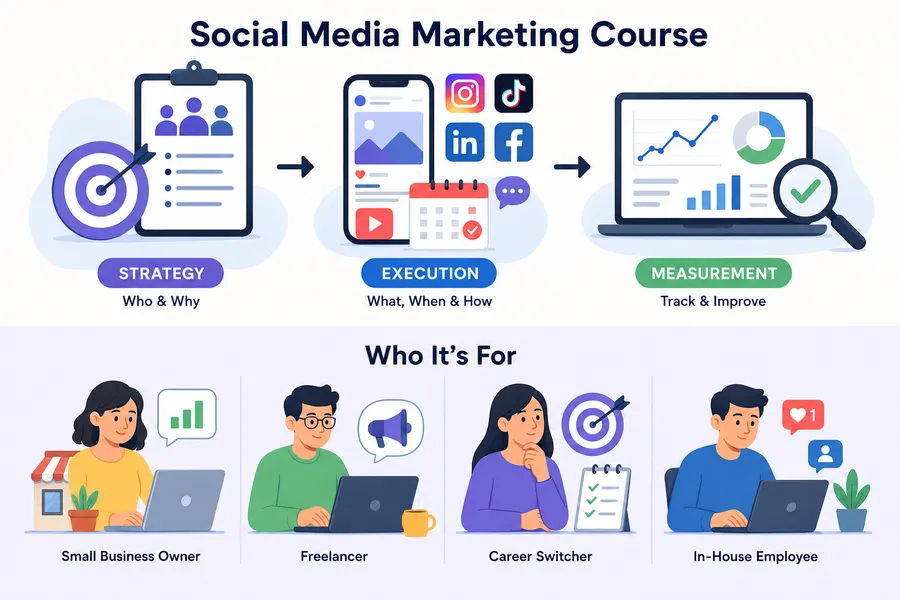
A social media marketing course teaches you how to plan, create, and measure content across platforms like Instagram, TikTok, LinkedIn, and Facebook, with the goal of growing an audience or generating leads for a business. That sounds broad because it is. A single weekend workshop cannot cover paid ads, organic content, analytics, community management, and influencer outreach in any real depth, so the first thing to check before enrolling is which of these areas the course actually goes deep on.
Most decent programs split the material into three buckets: strategy (who you are targeting and why), execution (what you post, when, and how), and measurement (whether any of it worked). If a course skips the measurement piece, walk away. Posting content without tracking click through rate, engagement rate, or cost per result is a hobby, not marketing.
Who this training is actually for
Small business owners managing their own accounts, freelancers who want to add social media services to their offer, career switchers targeting an entry level marketing role, and in house employees who got handed the company Instagram with zero training all show up in the same cohorts. The course content usually stays the same across these groups; what changes is how fast you move through it and which modules you skip.
A small business owner might rush through the branding theory and spend most of their time on the scheduling and analytics modules, since they already know their own product inside out. A career switcher, on the other hand, usually needs the strategy modules the most, because interviewers ask about audience segmentation and campaign planning far more often than they ask which button schedules a post. Knowing which category you fall into before you enroll saves you from paying for depth you do not need or skipping depth you actually do.
Why demand for this skill keeps growing
Businesses are not cutting social media budgets, they are shifting them toward people who can prove results. According to Coursera’s 2026 salary data, social media marketing salaries range from roughly $65,000 to $93,000 depending on the specific job title, and pay climbs further for anyone who can also run paid campaigns or manage a content calendar for multiple brands. Glassdoor’s broader social media marketing category puts the average salary closer to $85,000 a year, with top earners bringing in over $150,000.
That gap between the low end and the high end usually comes down to one thing: certification and proof of skill. Someone who finished a structured social media marketing course, built a portfolio, and can talk through a real campaign will always beat someone whose only experience is posting on their personal account.
The basics of digital marketing every course should include
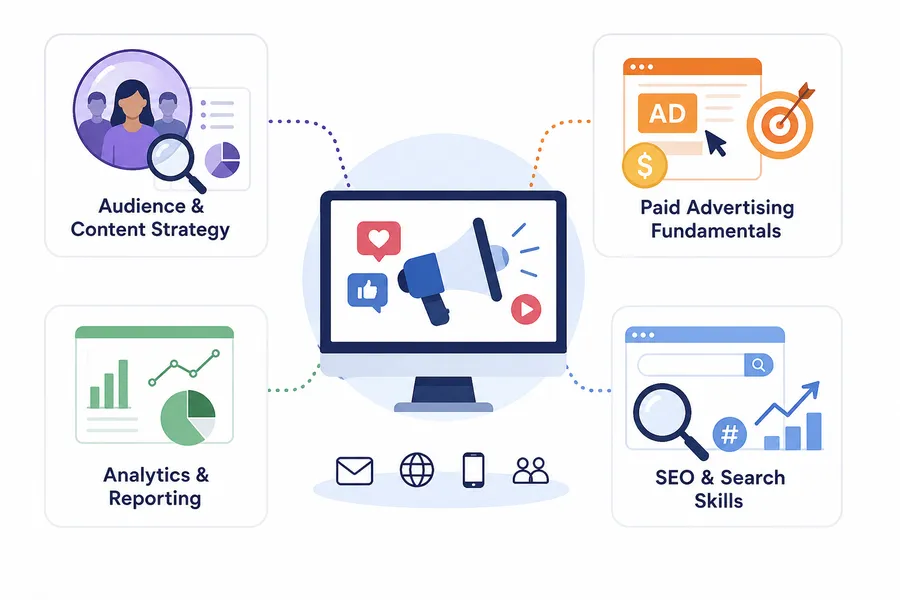
You cannot separate social media from the rest of digital marketing anymore. A course that only teaches you how to schedule posts and ignores everything else is teaching you half a skill. Look for these fundamentals of the basics of digital marketing inside any program you are considering.
A strong bridge here matters, so before jumping into the subtopics below, know that these are the non negotiable building blocks that show up in every serious curriculum, regardless of which platform it focuses on.
Content strategy and audience research
This covers building audience personas, auditing competitors, and mapping content types to each stage of the funnel. Courses that skip straight to “here’s how to use Canva” without this step tend to produce marketers who post pretty graphics with no clear purpose.
Paid advertising fundamentals
Meta Ads Manager, TikTok Ads, and LinkedIn Campaign Manager all work differently, and a good course walks through account structure, targeting, budget pacing, and how to read the results dashboard instead of just clicking through the ad creation wizard once.
Analytics and reporting
You should leave the course knowing how to read native platform insights (Instagram Insights, TikTok Analytics) as well as third party tools, and how to turn raw numbers into a report a business owner or client actually understands.
SEO and search adjacent skills
Social search is now a real behavior, especially on TikTok and Pinterest. Courses that touch on keyword research and how captions get surfaced in search results are ahead of the curve compared to ones that treat social and search as separate worlds.
Free vs paid social media marketing training online
Free resources are not automatically worse, and paid ones are not automatically better. The difference usually comes down to structure and accountability.
| Feature | Free training | Paid course |
|---|---|---|
| Cost | $0 | Typically $50 to $500+ |
| Structure | Scattered across blogs, YouTube, platform help centers | Organized curriculum with a clear sequence |
| Certificate | Rarely, or a basic completion badge | Usually included, sometimes accredited |
| Community or support | Limited to comment sections | Often includes cohorts, forums, or instructor access |
| Best for | Testing interest before committing | Career switchers and freelancers who need proof of skill |
If you are just trying to figure out whether this field interests you, start with free platform academies like Meta Blueprint or the HubSpot Academy library. Once you know you want to build a career or client base around it, a structured paid course pays for itself through faster learning and a certificate you can actually show.
Social media marketing courses with certificates: Are they worth it
Social media marketing courses with certificates are worth it when the certificate is tied to a recognizable institution or platform and when the course requires you to complete real projects, not just watch videos and pass a quiz. A certificate from Google, HubSpot, Meta, or an accredited university carries weight with hiring managers. A certificate from an unknown site with no course reviews mostly just sits in a folder.
When evaluating any certificate program, check three things: whether the issuing organization is recognizable, whether the course includes a portfolio project you can link to on LinkedIn, and whether past students have left verifiable reviews. If a program cannot answer those three questions clearly, treat the certificate as a nice bonus rather than the main reason to enroll.
It also helps to check how the certificate is delivered. Some programs email a static PDF the moment you finish the last video, with no project review involved. Others issue the certificate only after an instructor or automated grader checks a final assignment, which is a better signal that the credential actually reflects a skill and not just attendance. If you are comparing two otherwise similar options, the one with a graded final project is almost always the stronger choice, even if it takes a bit longer to finish.
How to compare the best social media marketing course options
There is no single best social media marketing course for everyone, because the right choice depends on your current skill level, your budget, and whether you are learning for a job or to run your own brand. That said, the comparison below covers the categories most learners fall into.
| Course type | Typical price | Certificate | Best for |
|---|---|---|---|
| University or accredited program | $300 to $2,000+ | Yes, accredited | Career switchers who need formal credentials |
| Platform academy (Meta, Google, HubSpot) | Free to $50 | Yes, platform issued | Beginners and freelancers building a portfolio |
| Cohort based bootcamp | $500 to $3,000 | Yes, with mentorship | People who want accountability and live feedback |
| Self paced LMS course | $30 to $300 | Yes, usually | Busy professionals learning on their own schedule |
Self paced options are where most independent creators and small business owners land, mostly because they can fit lessons around a full time job instead of committing to a live schedule.
A step by step plan to learn social media marketing online
If you want to build practical skills and make steady progress, follow these steps to create a focused learning path:
- Pick one platform to specialize in first. Instagram, TikTok, and LinkedIn each reward different content formats and posting habits. Trying to master all of them at once slows down real learning.
- Enroll in a structured course, not a playlist. A course with a syllabus, deadlines, and projects moves you faster than an endless scroll of unrelated tutorials.
- Build one real campaign while you learn. Use a personal brand, a friend’s small business, or a volunteer project. Theory without application does not stick.
- Track your numbers weekly. Engagement rate, follower growth, and click through rate tell you what is working long before “gut feeling” ever will.
- Finish with a certificate and a portfolio piece. Whatever social media marketing training online you choose, make sure you walk away with something concrete to show, not just a completion email.
Turning your expertise into a course of your own
Once you have gone through the learning curve yourself, a lot of freelancers and small agency owners start getting asked the same question by clients: “can you just teach us this instead?” That is usually the moment to package what you know into a paid course rather than repeating the same onboarding call every month. If you are running your training on WordPress, LearnPress makes that step straightforward, letting you build structured lessons, quizzes, and certificates for your own social media marketing course without needing a separate LMS platform or a developer to set it up.
Mistakes people make when choosing a course
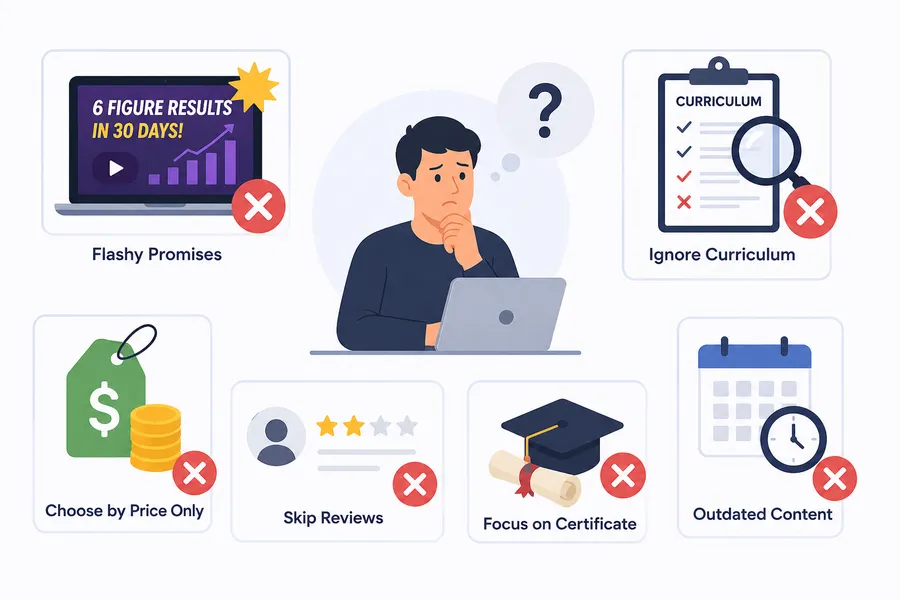
Signing up for the flashiest ad instead of checking the actual curriculum is the most common one. A course promoting “6 figure results in 30 days” in the thumbnail is selling a fantasy, not a skill. Other frequent mistakes include picking a course based on price alone without checking whether it covers paid ads at all, skipping the reviews section, and enrolling in something built for beginners when you already have two years of hands on experience and need something more advanced.
Another mistake worth naming: treating the certificate as the finish line. The certificate gets you an interview or a first client conversation. What keeps that client or that job is whether you can actually run a campaign and explain the results afterward.
A less obvious mistake is ignoring how recently the course was updated. Platform algorithms and ad interfaces change often enough that a course recorded three or four years ago can teach workflows that no longer exist, especially around paid advertising dashboards. Before enrolling, check the last update date if the platform shows one, or scan recent reviews for mentions of outdated screenshots or broken instructions.
FAQs
How long does it take to complete a social media marketing course?
Most self paced online courses take between 4 and 12 weeks to finish, depending on how many hours a week you can commit and whether the course includes hands on projects. Cohort based bootcamps tend to run on a fixed schedule, usually 8 to 16 weeks, since they include live sessions and group deadlines.
Do I need a degree to work in social media marketing?
No, a formal degree is not required for most social media marketing roles, since employers usually prioritize a portfolio, a certificate from a recognized program, and measurable results over a specific diploma. That said, a marketing or communications degree can help for more senior or agency level roles.
Which platform should beginners learn first?
Beginners generally get the fastest results learning Instagram or TikTok first, since both platforms have large audiences, straightforward content formats, and extensive free learning resources from the platforms themselves. LinkedIn is a strong second platform for anyone targeting B2B clients or corporate roles.
Can I get a job with only free social media marketing training?
Yes, it is possible, especially for entry level or freelance work, but you will need to build a visible portfolio to make up for the lack of a paid certificate. Combining free training with one real project, even an unpaid one, usually does more for your job search than any certificate on its own.
Conclusion
Picking the right social media marketing course comes down to matching the format to your goals: free platform academies for testing interest, self paced courses for busy schedules, and cohort based bootcamps for people who want mentorship and deadlines. Whatever path you choose, prioritize programs that cover strategy and analytics alongside content creation, and make sure you finish with a certificate and a real project you can show. And if you end up on the other side of that journey, ready to teach what you have learned, building your own course on a platform like LearnPress is one of the more direct ways to turn that expertise into income.
Read more: LMS reviews: How to pick the right learning management software