Picking one of the many free online training platforms out there can feel harder than it should be. Some cap your student count, some hide certificates behind a paywall, and some are built for corporate onboarding rather than public courses.
This list breaks down the best free online course platforms available right now, what you actually get at the $0 tier, and who each one fits best.
LearnPress – WordPress LMS Plugin
We provide an amazing WordPress LMS plugin to create & sell online courses. Let’s find out!
Try NowTable of Contents
How we evaluated these platforms
We looked at ten platforms that show up consistently in searches for free course platforms, then tested the free tier of each one directly: signing up, building a sample lesson, checking the student cap, and confirming whether a certificate is actually free or locked behind a paid upgrade.
Three things mattered most in the testing:
- What’s genuinely free. Several platforms market themselves as free but charge a transaction fee on every sale or gate certificates behind identity verification fees. We noted every hidden cost we found.
- Who the platform serves. A free online e learning platform built for corporate onboarding, like SC Training, works differently than one built for public course creators, like LearnPress, or one built for students auditing university content, like edX.
- How the free tier holds up at scale. A platform that’s free for five students isn’t the same as one that’s free for five hundred. We flagged student caps and storage limits wherever they applied.
This walkthrough reflects each platform’s pricing and feature set as of mid-2026. Free plans change often, so it’s worth double-checking a platform’s pricing page before you commit a full course to it.
The best free online training platforms in 2026
Here’s a quick side-by-side view before the full breakdowns below.
| Platform | Best for | Free certificate | Student limit |
|---|---|---|---|
| Google Classroom | K-12 and small team classes | No (grading only) | None |
| Coursera | Auditing university courses | Rarely, on audit track | None |
| edX | University-level self-paced learning | No, unless verified | None |
| Khan Academy | Self-paced academic subjects | Badges, not formal certificates | None |
| Alison | Free certificates and diplomas | Yes, digital certificate | None |
| SC Training (EdApp) | Corporate microlearning | Yes, on free plan | Up to 5 users free |
| Udemy free courses | One-off skill courses | Yes, on free courses | None |
| LearnPress (WordPress) | Building and owning your own course site | Yes, fully customizable | None |
| Moodle | Institutions needing full LMS control | Depends on setup | None (self-hosted) |
| OpenLearn | Free university-style short courses | Free digital badges | None |
Google Classroom: the simplest free online training software
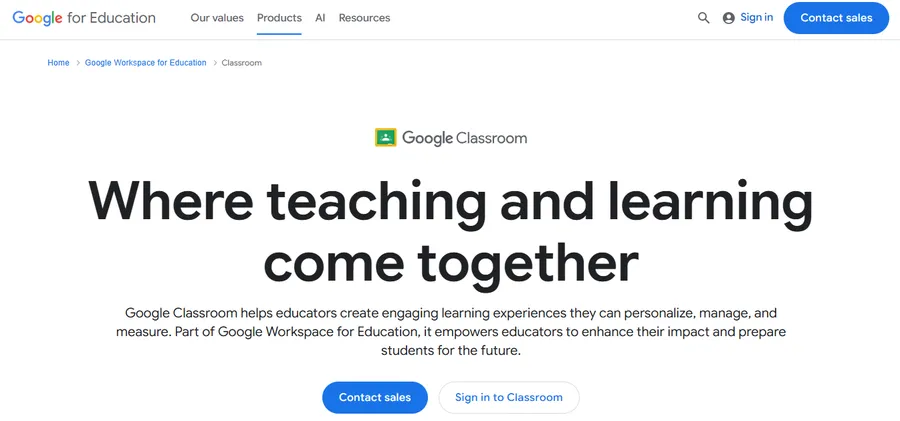
Google Classroom is genuinely free with no upgrade tier hiding behind it, which makes it one of the easiest free online training software options for anyone already using Google Workspace.
Key features
Assignments, grading, and announcements live in one stream. Google Classroom connects directly to Docs, Sheets, Slides, and Google Meet, so live sessions and assignment feedback stay in the same place. There’s no course marketplace and no student payment system, because Classroom was built for teachers and internal trainers, not for selling courses publicly.
Who it’s best for
Teachers running a school class, and small teams that need a lightweight way to assign reading, quizzes, or short modules without buying separate software.
Limitations
There’s no way to sell a course or issue a formal completion certificate. It’s an organizing tool, not a course-hosting business platform.
Coursera: the most recognized free platform for online courses
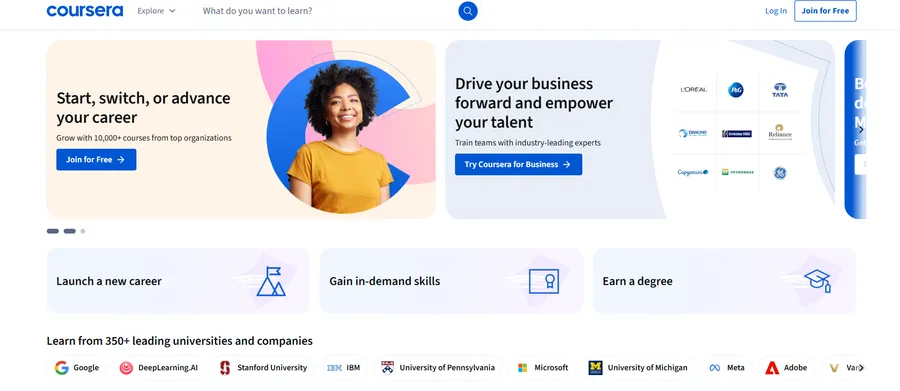
Coursera is one of the most searched free platforms for online courses, mainly because it partners with universities like Yale, Stanford, and the University of Michigan, plus companies like Google and IBM.
Key features
Auditing a Coursera course gives you full access to video lectures and reading material for free. What you lose on the audit track is graded assignments and the shareable certificate, both of which sit behind a paid upgrade or a financial aid application.
Who it’s best for
Learners who want university-level instruction on a specific subject and don’t need a certificate to prove it, since financial aid applications can take several days to process.
Limitations
Financial aid isn’t guaranteed, and the audit track quietly excludes some interactive elements like peer-graded projects.
edX: free online e learning platform for university-level content
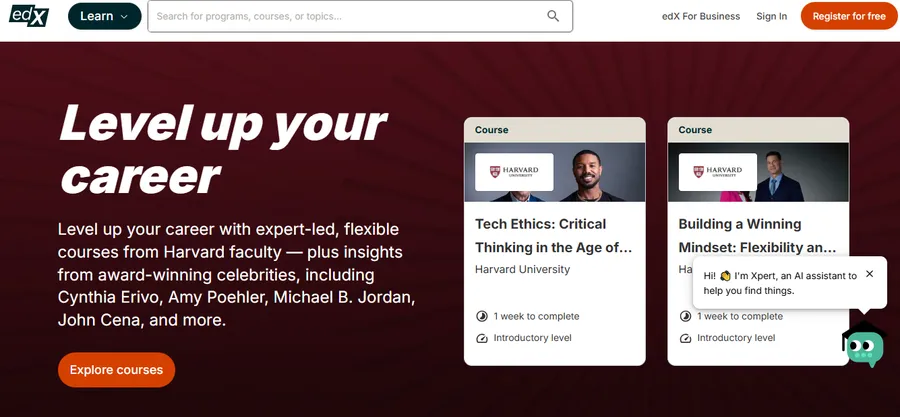
edX runs on the same audit model as Coursera and remains one of the strongest free online e learning platform choices if your priority is content over paperwork.
Key features
Courses come directly from institutions such as Harvard, MIT, and Berkeley, and most allow full video and reading access on the free audit track. Course pacing is usually self-directed, so there’s no fixed start date pressure.
Who it’s best for
Self-directed learners comfortable studying without a certificate, particularly in technical fields like data science, computer science, and public health.
Limitations
A verified certificate requires payment, and some edX courses have moved to a subscription model rather than a one-time audit option.
Khan Academy: the free choice for structured academic learning
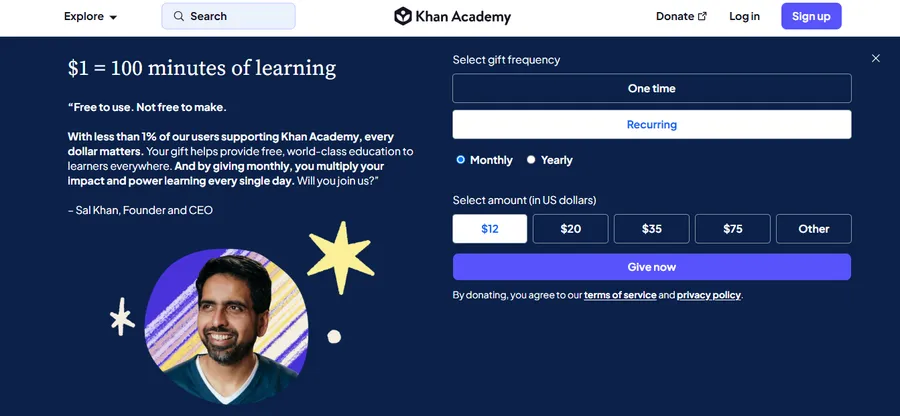
Khan Academy has stayed genuinely free since it launched, without a hidden upgrade tier, which is rare among the free online training platforms on this list.
Key features
Subjects run from early math through AP-level courses, with instant practice feedback and a mastery-tracking dashboard that shows exactly which skills a learner has and hasn’t mastered yet.
Who it’s best for
Students working through math, science, or standardized test prep, and parents supplementing a school curriculum at home.
Limitations
It’s built for academic subjects, not professional or vocational skills, so it won’t cover things like marketing, coding bootcamps, or workplace training.
Alison: free certificates on one of the best free online course platforms
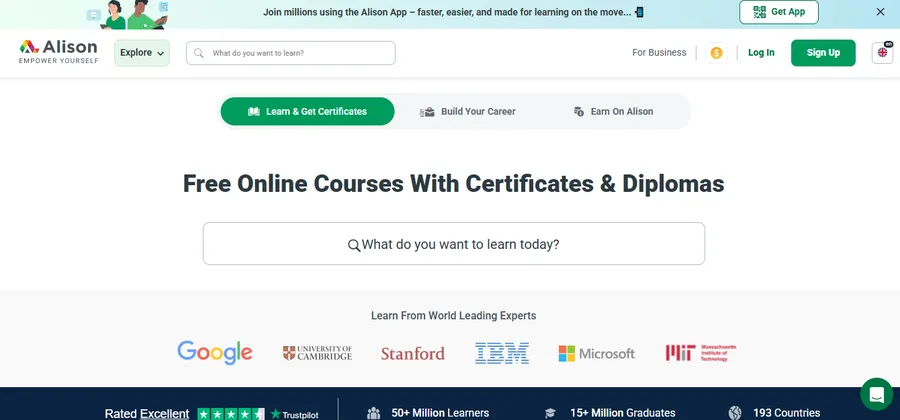
Alison consistently ranks among the best free online course platforms for one specific reason: it gives out a free digital certificate after most courses, without a paywall in the way.
Key features
The course library spans business, IT, health, and language learning, with each course broken into short video modules followed by a graded assessment. Passing the assessment unlocks the certificate immediately.
Who it’s best for
Job seekers who want a quick, low-cost credential to add to a resume or LinkedIn profile without enrolling in a full degree program.
Limitations
The interface carries ads on the free tier, and printed or physical certificates require a paid add-on.
SC Training (EdApp): free online training software for small teams
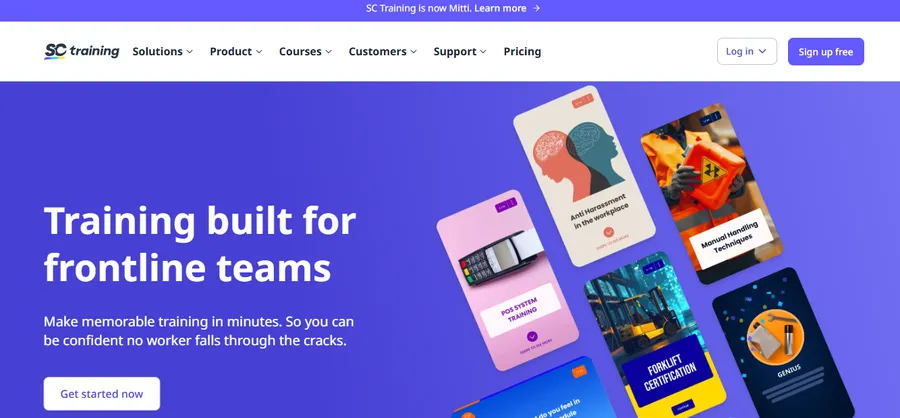
SC Training, formerly EdApp, focuses on corporate microlearning rather than public course sales, and its free plan covers up to five users, which makes it a workable free online training software pick for very small teams.
Key features
Courses are built from short, mobile-first lessons with built-in gamified quizzes, and the platform includes an AI translation tool that converts course content into other languages automatically.
Who it’s best for
Small businesses running onboarding or compliance training that need something mobile-friendly without buying enterprise LMS software.
Limitations
The five-user cap on the free plan means it stops working the moment a team or public audience grows past a handful of people.
LearnPress: build your own free online training platform on WordPress
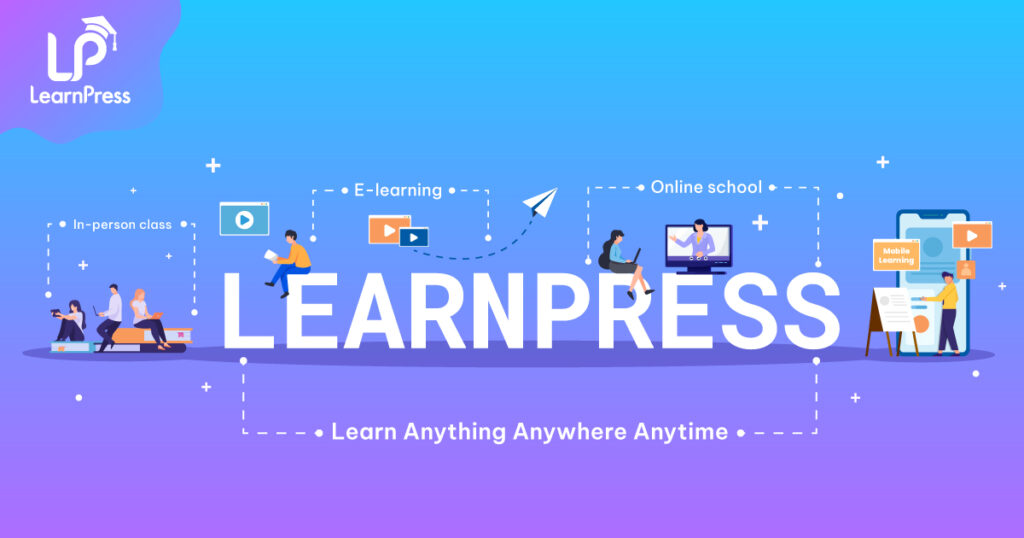
If the goal is owning the platform itself rather than renting space on someone else’s, LearnPress is worth a serious look. It’s a free WordPress LMS plugin that turns any WordPress site into a fully branded course platform, with no per-student fee and no revenue cut on course sales.
Key features
Course creation happens directly inside the WordPress dashboard, with a drag-and-drop curriculum builder for organizing lessons, quizzes, and prerequisites. LearnPress supports PayPal, Stripe, and WooCommerce for payments, so selling a course works out of the box if that’s the eventual goal, and BuddyPress integration adds discussion and community features for enrolled students.
Who it’s best for
Anyone who wants full control over branding, data, and pricing, especially site owners who already run WordPress and don’t want to migrate content to a third-party course marketplace later.
Limitations
It requires an existing WordPress site and some comfort with plugin settings, so it’s a steeper first-hour setup than a plug-and-play hosted platform, though the payoff is a course site you fully own.
Moodle: the open-source pick among free platforms for online courses
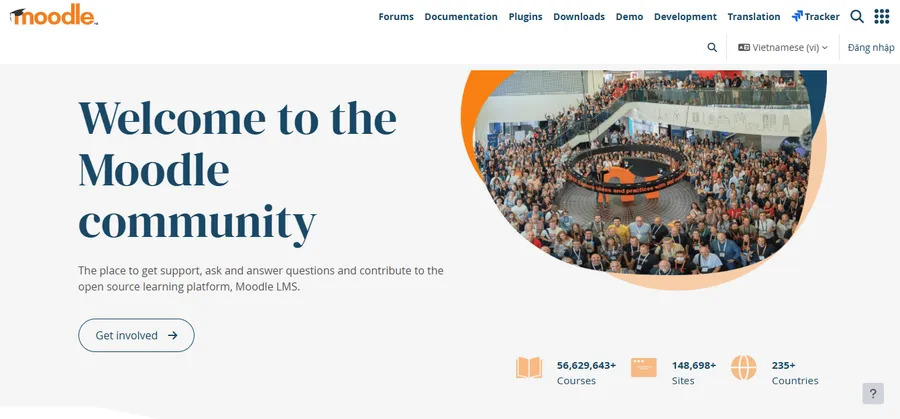
Moodle has been one of the longest-running free platforms for online courses, and it’s the standard LMS used by many universities and government training programs.
Key features
Moodle is open source and self-hosted, meaning there’s no license fee, but you’re responsible for hosting it yourself or paying a Moodle partner to host it for you. It supports SCORM content, detailed grade books, and granular permission settings for large, multi-department organizations.
Who it’s best for
Institutions and organizations that need full control over data, compliance, and integrations, and that have the technical resources to manage hosting.
Limitations
Self-hosting means you need a developer or IT support to keep it running smoothly, which puts it out of reach for solo course creators without technical help.
OpenLearn: a genuinely free online e learning platform from a real university
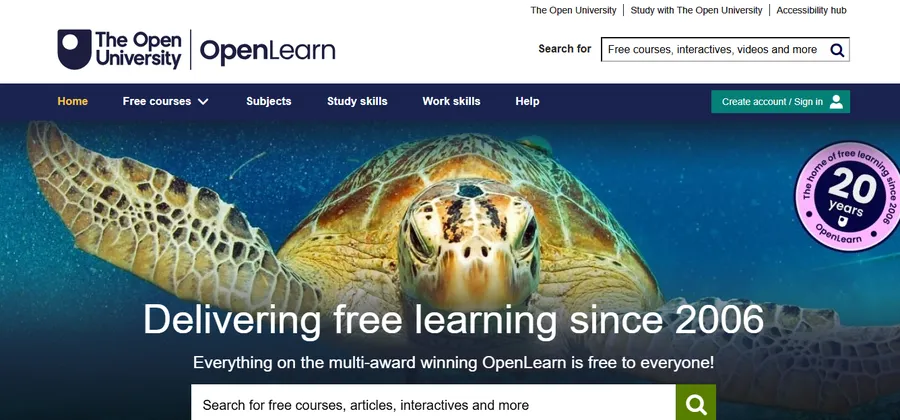
OpenLearn is run by the Open University in the UK, and it remains one of the few platforms on this list with no upsell at all baked into the free online e learning platform experience.
Key features
Short courses cover a wide academic range, from history to engineering, and most finish in under 24 hours of study time. Completing a course unlocks a free digital badge that can be shared on LinkedIn.
Who it’s best for
Curious learners who want short, credible academic content without signing up for a subscription or an audit workaround.
Limitations
Course selection is narrower than Coursera or edX, and there’s no path to a formal university credit or degree through the free courses.
How to choose the right platform for your training goals
Match the platform to what you’re actually trying to do, not just what ranks first in a search.
If you’re learning for yourself, Khan Academy, OpenLearn, and the audit tracks on Coursera and edX cover most academic and professional subjects without costing anything. If you need a certificate specifically to show an employer, Alison and SC Training both issue one on their free tiers. If you’re building and selling your own courses, the calculation changes: hosted platforms often take a percentage of every sale, while a self-hosted option like LearnPress charges nothing per transaction because the course lives on a site you control.
Team size matters too. SC Training’s free plan works fine for five people and stops working the moment a sixth person joins. Google Classroom and LearnPress don’t cap users at all, which makes them a safer long-term choice if a small pilot might turn into something bigger.
FAQs
Are free online training platforms actually free, or is there a catch?
Most have some catch, whether it’s a transaction fee on sales, a paywall on certificates, or a cap on student numbers. Google Classroom, LearnPress, and OpenLearn are among the few with no hidden fee structure built into their free tier.
What is the best free platform for online courses with a certificate?
Alison and SC Training both issue certificates on their free plans without requiring payment first. Coursera and edX generally require a paid or financial-aid-approved verified track to unlock a certificate.
Can I build and sell my own course for free?
Yes. LearnPress lets you build, host, and sell courses directly from a WordPress site with no revenue share taken by the plugin itself, though you’ll still need standard WordPress hosting and a payment processor like Stripe or PayPal.
Which free online e learning platform is best for beginners with no technical skills?
Google Classroom and Alison are the easiest to start with, since both work entirely through a browser with no setup beyond creating an account. LearnPress and Moodle require more initial setup because they’re built for people who want a fully owned, customizable training platform.
Final thoughts
There isn’t one best free online course platform for every situation. Academic learners are better served by Khan Academy, OpenLearn, or the audit tracks on Coursera and edX. Teams that need to onboard a handful of people quickly can lean on SC Training or Google Classroom. And anyone planning to build a course business long-term should look closely at LearnPress, since owning the platform on WordPress avoids the transaction fees and student caps that show up on almost every hosted alternative on this list. Start with whichever platform matches where you are today, and switch later if your training needs outgrow it.
Read more: How to Start an Online Course Business