Picking up a new skill used to mean signing up for a night class or waiting months for a seat to open at a local college. That is not how it works anymore. If you want to learn new skills online today, you can start a lesson on your phone during a coffee break and finish a certificate before the weekend. The harder part is not finding a course. It is figuring out which of the hundreds of options is actually worth your time.
This guide walks through the platforms, formats, and habits that make online learning stick, plus how to tell a genuinely useful skill development course from one that just looks polished in the marketing screenshots. Whether you are switching careers, picking up a hobby, or creating a course to teach others what you already know, the same basic questions apply: does this format fit how you actually learn, and does the platform get out of your way once you have started?
LearnPress – WordPress LMS Plugin
We provide an amazing WordPress LMS plugin to create & sell online courses. Let’s find out!
Try NowTable of Contents
Why online skill development has changed so much
A decade ago, online skills training mostly meant pre-recorded video lectures with a quiz at the end. Today the format has shifted toward shorter lessons, live cohorts, project-based assignments, and AI-assisted feedback that used to require a human tutor.
Three things changed the landscape:
- Mobile-first delivery. Most learners now start lessons on a phone and finish them on a laptop. Platforms that do not sync progress across devices lose users fast.
- Cheaper production tools. A single instructor with a decent microphone and screen recorder can now produce content that used to require a studio budget. That opened the door to thousands of niche instructors teaching everything from spreadsheet formulas to welding.
- Employer demand for verifiable skills. Hiring managers increasingly ask for proof of applied work, not just a certificate. This is why project portfolios and skill assessments have become a bigger part of professional skills training than they were five years ago.
What to look for in online courses for skill development
Not every course labeled “beginner friendly” actually teaches you something you can use. Before you enroll, check for the signals below.
Clear learning outcomes
A strong course tells you exactly what you will be able to do by the end, not just what topics it covers. “Build a working budget spreadsheet with formulas” is a better outcome statement than “learn Excel basics.”
Recent updates
Software and tools change constantly. A course last updated three years ago on a design tool or a coding framework may teach outdated workflows. Check the “last updated” date before you pay.
Active instructor support
Look for courses where the instructor answers questions in a discussion board or community group. Skill development courses with no support channel tend to have higher drop-off rates because learners get stuck and quit.
Practical assignments, not just quizzes
Multiple-choice quizzes confirm you watched the video. Assignments where you build something, submit it, and get feedback confirm you can actually do the skill. Favor courses that include the second kind.
Best online courses for learning new skills in 2026
There is no single best platform for every goal. Someone learning graphic design has different needs than someone training for a project management certification, and someone who wants to build and sell their own course has different needs again. The table below compares popular platforms by strengths and typical use case, followed by a closer look at each one.
| Platform | Best for | Format | Pricing style |
|---|---|---|---|
| Coursera | University-backed certificates and degrees | Video lectures, graded assignments | Subscription or per-course |
| Udemy | Wide catalog of practical, one-off skills | Self-paced video | One-time purchase per course |
| LinkedIn Learning | Workplace and professional skills training | Short video lessons | Monthly subscription |
| Skillshare | Creative skills like design, writing, and video | Project-based classes | Monthly subscription |
| edX | Academic and technical depth | Video, labs, verified certificates | Free audit or paid certificate |
| Self-hosted WordPress course sites | Custom branded training, niche audiences | Fully flexible, instructor-controlled | Set by the course creator |
Coursera
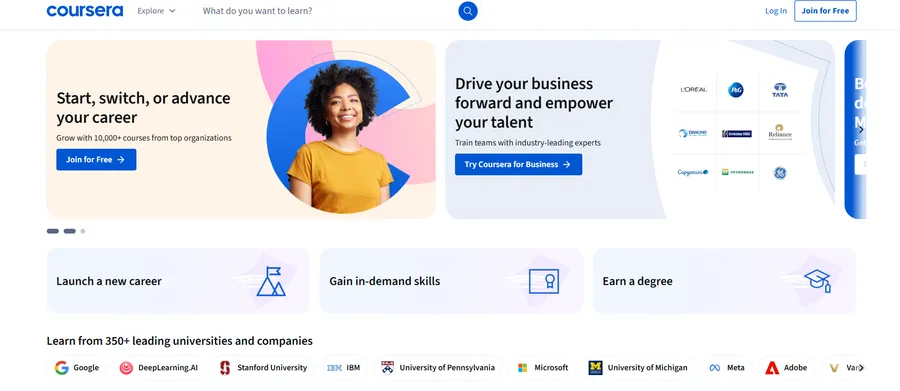
Coursera partners with universities and companies to offer structured programs, some of which count toward real degrees. It works well if you want a recognized credential attached to your learning, though the pacing can feel more academic than other options.
Udemy

Udemy has one of the largest catalogs of online courses for learning new skills, ranging from software tutorials to hobby classes. Quality varies by instructor, so check reviews and preview a few lessons before buying.
LinkedIn Learning
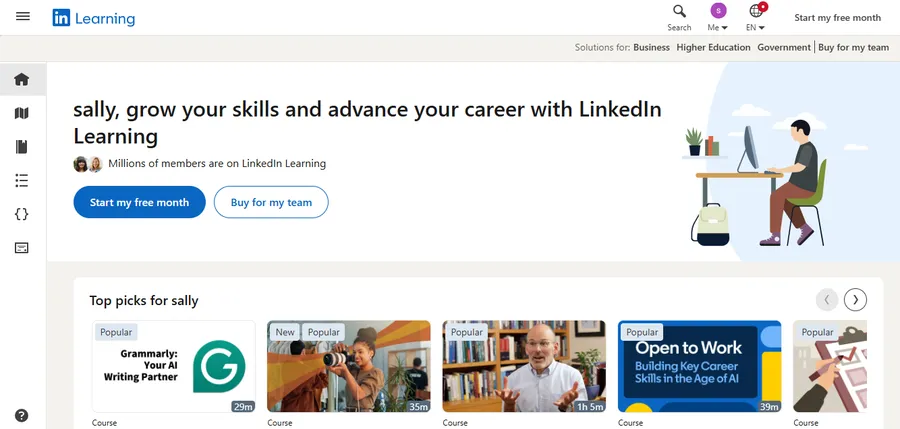
If your goal is workplace-relevant skill development courses, such as project management, Excel, or leadership training, LinkedIn Learning ties directly into your professional profile and is a common pick among corporate training budgets.
Skillshare

Skillshare leans into creative fields. Its project-based structure suits people who learn best by making something rather than watching a lecture straight through.
edX
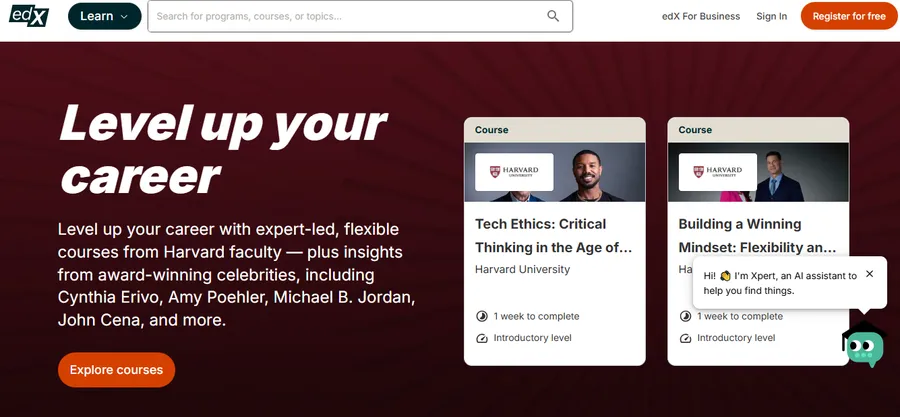
edX offers university-level depth, including free audit tracks if you just want to learn without paying for a certificate. It suits learners who want a more rigorous, textbook-adjacent approach to online skills training.
Self-hosted WordPress course sites
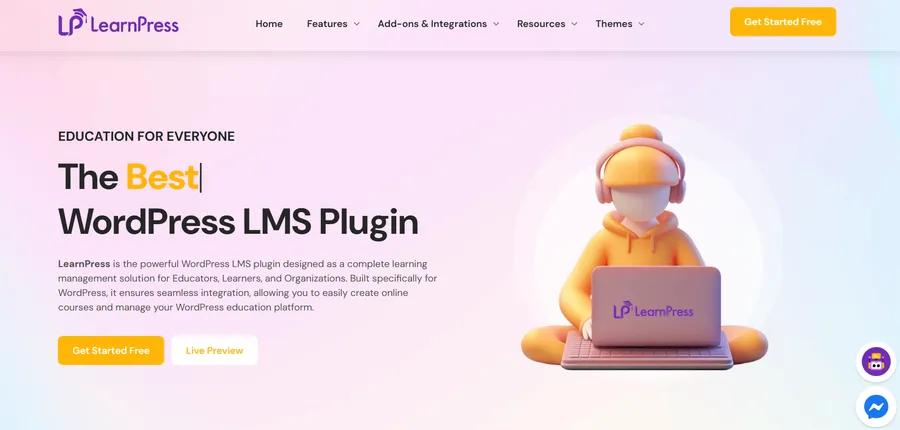
Some of the best skill development courses are not on a marketplace at all. Independent instructors, coaches, and small businesses increasingly build their own course sites on WordPress so they keep full control over pricing, branding, and student data instead of sharing revenue with a marketplace. This is where a plugin like LearnPress comes in: it turns a regular WordPress site into a full course platform with lessons, quizzes, certificates, and student progress tracking, without needing a separate LMS subscription.
Skills that are in high demand for online training right now
Not all skills are worth the same amount of study time. Some categories consistently show up as the most searched online courses for learning new skills, largely because employers are actively hiring for them or because they save people money by doing things themselves.
Data and AI literacy
You do not need to become a data scientist to benefit from data skills. Spreadsheet analysis, basic SQL, and knowing how to work alongside AI tools are now common requirements in marketing, operations, and finance roles that had nothing to do with data five years ago.
Digital marketing and content skills
SEO, email marketing, and short-form video editing remain some of the most enrolled categories across every major platform. Part of the appeal is that these skills translate directly into freelance income, which makes the return on a course fee easy to measure.
Project and product management
As remote and hybrid teams became permanent rather than temporary, structured project management skills, including tools like Jira, Asana, and Notion, moved from “nice to have” to a baseline expectation in many job postings.
Practical, hands-on trades
Interest in skill development courses for practical trades such as basic electrical work, woodworking, and home repair has grown alongside rising service costs. These are often taught through video demonstration, which suits online skills training better than most people expect.
Communication and leadership
Soft skills are harder to market than technical ones, but they consistently show up in professional skills training catalogs because managers repeatedly ask for them in performance reviews. Courses that combine short video lessons with real scenarios, rather than abstract theory, tend to perform best here.
How to choose the right training skills course for your goals
Matching the course to the outcome matters more than picking the platform with the biggest name.
- If you want a career change: Choose a professional skills training program with a portfolio component or an industry-recognized certificate. Coursera and edX tend to fit here because employers recognize the university partnerships behind them.
- If you want a specific tool skill fast: Choose a short, focused course rather than a broad program. Udemy’s per-course pricing works well for this because you are not committing to a subscription for one narrow skill.
- If you want to build a habit of learning: Choose a subscription platform with short lessons you can fit into small pockets of time, such as LinkedIn Learning or Skillshare. Consistency matters more than course length when you are building a long-term learning habit.
- If you want to teach what you know: If your goal is the reverse, turning your own expertise into an online skills training course, a self-hosted WordPress site with a plugin like LearnPress gives you more control over pricing and student relationships than a marketplace does, since you are not competing for visibility against thousands of other listings.
Building your own skills training program with WordPress
A growing number of coaches, consultants, and small training businesses skip the big marketplaces entirely and build their own course site. The appeal is straightforward: you own the student list, you set your own price, and you are not competing against thousands of similar listings for attention.
LearnPress is one of the more approachable options for this. It is a free WordPress LMS plugin that lets you structure courses into lessons and quizzes, track student progress, issue certificates, and sell access through standard WooCommerce payment gateways, all from a WordPress dashboard you likely already know how to use. For instructors who want their skill development courses to live on their own branded site rather than a shared marketplace, it removes most of the technical setup that used to require a developer.
Whether you build the course yourself or take one from an established platform, the underlying goal is the same: learn or teach a skill in a format that fits real life, not just a syllabus.
Habits that help you actually finish a course
Most people who sign up for online courses for skill development do not finish them. The course quality is rarely the reason. These habits make a bigger difference than which platform you choose.
- Set a weekly time block instead of “when I have time.” A recurring 30-minute slot on your calendar beats a vague intention every time.
- Do the assignment before moving to the next lesson. Watching five lessons in a row without practicing anything creates a false sense of progress.
- Tell someone what you are learning. A small amount of social accountability, even just mentioning it to a coworker or friend, measurably increases completion rates.
- Pick one skill at a time. Splitting attention across three courses at once is the fastest way to finish none of them.
- Review what you learned within 48 hours. A short recap, even just five minutes of rereading your notes or redoing a practice exercise, makes the material far more likely to stick than moving straight on to the next lesson without looking back.
Conclusion
There is no shortage of ways to learn new skills online right now, from university-backed certificate programs to self-hosted course sites built on WordPress. The platform matters less than the fit between the course format and your actual goal, whether that is a career change, a specific tool skill, or building your own training business. Start with one clear outcome, pick the platform that matches it, and protect a consistent block of time to work through it.
FAQs
What is the best way to learn a new skill online for free?
University audit tracks on edX and Coursera let you access course content without paying, though you usually will not get a certificate unless you upgrade. YouTube and official documentation from software companies are also solid free starting points for technical skills.
How long does it take to learn a new skill through an online course?
It depends heavily on the skill and the time you commit weekly, but most focused, practical courses are designed to take anywhere from a few hours to a few weeks of part-time study. Broader professional skills training programs aimed at a career change can take several months.
Are online skill development courses recognized by employers?
Many are, particularly certificates from recognized universities or major platforms like Coursera and LinkedIn Learning, but recognition varies by industry and role. A strong portfolio or demonstrated project work often matters as much as the certificate itself.
Can I create my own online course instead of taking one?
Yes, and it is more accessible than most people expect. A WordPress site with a plugin like LearnPress lets you structure lessons, quizzes, and certificates without hiring a developer, which is why many independent instructors choose to self-host rather than list on a marketplace.
Read more: LearnPress Payment Settings: The All-In-One Tutorial